

Photography by Michelle Nash
You’re going to laugh, but one of my most poignant, life-altering moments in recent history was just last month—when I found myself staring at the ceiling. Not some big journaling unlock. No meaningful moment of gratitude while trotting along on an afternoon walk. No literary stirring of my soul. Nope. Just me, sprawled on a bed in my bubblegum-pink bathrobe, staring at a dusty ceiling fan.
Noticing.
I was midway through a lesson in returning. And by that, I mean an absence of social media, podcasts, and television. I won’t harp on the reasons—we all know why—but for me, in this specific moment in time, I’d begun to worry that my ability to wander was a lost art. I didn’t know where my mind would go if I let its tendrils of thought expand into the unknown, because I’d been cutting it off with a distraction at every opportunity. My Pavlovian response to a millisecond of free (or, more often, borrowed) time was to reach for a device and scroll until soothed.
I lay on the bed and felt my fingers twitch, searching for the pacifying false promise of my phone. But this time, instead of giving in, I stepped in. I noticed the instinct and shut it down in favor of, well, staring at the ceiling—giving my dormant imagination a moment to stretch, explore, and wander down neural pathways I’d previously loaned out to far less stimulating actions.
The truth is that we’re not bad at being present—we’ve been trained out of it. It’s almost instinctual to fill every empty moment, and while we sense it, we rarely pause long enough to consider the cost—especially when the next dopamine hit is so easy to access. I’m not just talking about our phones, either. It shows up in our wellness routines and productivity hacks. In our constant search for novelty. In the way we bounce from Pilates to weights to barre, each promising a body more sleek and toned and worthy of love than the last.
All this noise clouds what’s most precious to us—the one thing that cannot be commodified: our inner signal. We lose depth and discernment in a world that demands both. We were created to access intuition, yet we keep wading in shallow waters. Our bodies send cues, but we override them or can’t decipher one from the next. Even our creative ability to wonder, dream, ideate, and execute feels suffocated.
We need oxygen.
We need space.
When everything around us promises more, the truth is this: clarity doesn’t come from adding the right thing. It comes from removing what was never necessary in the first place.



Death to the Doom Scroll
Let’s begin with the obvious. We scroll to soothe. We fill the silence and rebrand scrolling as rest. Even now, my fingers itch to open Instagram as a salve for pushing out another paragraph without the crutch of AI (we’re going full, messy human here). But the best lie always holds some truth—and this one hides in plain sight: consumption is not rest. When everything is available, nothing is absorbed. Rest included.
Many of us have tried a media reset. Many of us have shared the “surprising results!” when we returned. I sometimes wonder when our most surprising result will be not coming back at all—and not feeling the need to share. However, I think our innate need for community overrides this. And honestly, I find that beautiful. We want to share what helps.
For me, a month without social media was unexpectedly grounding. It was a brutal month for the world—which, sadly, can be said for many months—but this one, I’m told, brought out the ugliest sides of social media. I noticed the difference in conversations with people who consumed the news via TikTok or Instagram versus my own habit of reading journalists in my inbox each morning. I absorbed more facts. I formed my own opinions. I felt less anxious, more informed, and more grounded.
On a lighter note, I skipped movies and shows I’d been looking forward to—and realized how often I let myself numb out to something just okay because it was there. Instead, I read more books. I talked more with my husband. And I slept. Oh, how I slept.
I grew comfortable with boredom. I didn’t hit an afternoon slump. My energy steadied. I let myself wind down when my eyes grew heavy at 8:30, instead of forcing myself through another episode on the couch.
Again, I was noticing—something dulled by the constant inputs I’d been feeding myself. I noticed the world without voices telling me what to think. I noticed when I felt creative. I noticed when I felt tired. I named what I wanted more easily. I stopped dulling my ability to feel—and then act.
This isn’t about quitting media outright. It’s about being selective. Fewer sources. Slower intake. More intention. Quality over volume.
Try this: Take inventory of your media inputs—accounts you follow, newsletters you read, shows you watch, podcasts you subscribe to. How many “gurus” are speaking into your life? Is there anything you’re still consuming because it worked once, but it doesn’t work now?
Attention is your currency. You get to decide how you spend it.
This might look like reading one newsletter you truly love instead of five. Listening to one thoughtful podcast a week instead of constant background noise. Letting silence exist when you’re doing small tasks or taking a walk. Discomfort doesn’t mean something is wrong. Like rest, discomfort can be productive.


EDIT VOL. 06
The Clarity Issue
Protocol for the People
“Listen to your body” is top-tier health advice. And yet, I think often of the meme: my body is telling me to get another Oreo. What happens when our signal shuts down? When we lose the ability to attune to our singular physical selves?
We’ve overloaded on supplements, protocols, and trends. Wellness influencers flood our feeds. [Insert your thing here]-maxxing is everywhere. The subtle anxiety of trying to “do health right” keeps it all spinning.
Then there’s the consumer side: a new wellness brand, a new workout, a new product, a new bra—daily. Wellness demands our dollars. So we stack. We read the books. We pile on the tools. We swallow the pills.
Wellness itself is good because we all deserve to live well. The problem begins when inputs cross the line from wisdom to noise. When we add so much that we mute our body’s ability to give feedback. The tools can help—but only when we’re discerning about which ones, and when.
Try this: Take stock of your supplements. Most people can meet their needs through a balanced, colorful diet. You’re likely okay skipping a prebiotic or probiotic unless your doctor suggests otherwise. Add fermented foods like yogurt or miso. Protect collagen by limiting alcohol and sun exposure. No supplement replaces vegetables, protein, and minerals. And frankly, it’s more affordable to add a bag of spinach to your cart—and actually finish it.
Return to basics for a season and notice what changes. By pausing a protocol, you invite simplicity—and simplicity rebuilds trust with your body. When you stop crowding yourself with options, cause and effect become clearer. If stopping feels scary, ask why. Then ask: What actually helps me feel steady? The answers might surprise you.
Return to Yourself
Clarity doesn’t arrive like a lightning bolt. It comes slowly, through repetition and the conscious choice to create more space and less noise. Over time, you may notice a calmer baseline, a subtle return of creativity, clearer preferences, improved energy, and wandering thoughts that feel less like a cliffside and more like an open field.
You can’t lose your inner signal—but you can bury it. It won’t compete with noise. It won’t shout. The less noise you let in, the more you’ll hear what’s been there all along.
Subtraction is a power move. It’s choosing yourself over the voices trying to speak for you. It’s an amplification of who you already are.
Practice Makes Peace
You don’t have to go full hermit to access the power of fewer inputs—but you do have to practice. This is seasonal, flexible, and forgiving. Like any practice, it’s a daily returning. It’s a muscle.
Choose one small soft-reduction:
Read 10 pages instead of scrolling
Choose silence instead of a podcast once a week
Pause one supplement or skincare product for a month
The goal isn’t to reach some new apex of wellness. The goal is to create conditions where you can hear yourself again.
Reflect:
What inputs leave me feeling clearer? Which leaves me depleted?
What am I consuming out of habit rather than intention?
Where am I mistaking more information for more clarity?
What could I pause—not eliminate—this season?
What might I hear if I left one moment unfilled?
Break the Ceiling—and Marvel
We had a moment, me and the ceiling. It felt like a breakthrough. I let the discomfort pass like a wave, and suddenly, my mind opened to possibilities I’d been missing. It felt like those long childhood drives when the music played, and I’d suddenly “come to,” realizing I’d been in another world for miles. There’s magic in the ability to wander beyond our reality to marvel at what is, and what could be.
Those dusty crevices of my mind woke up again, and I’d won some small victory. I swear I could hear my inner voice whisper, Welcome home.
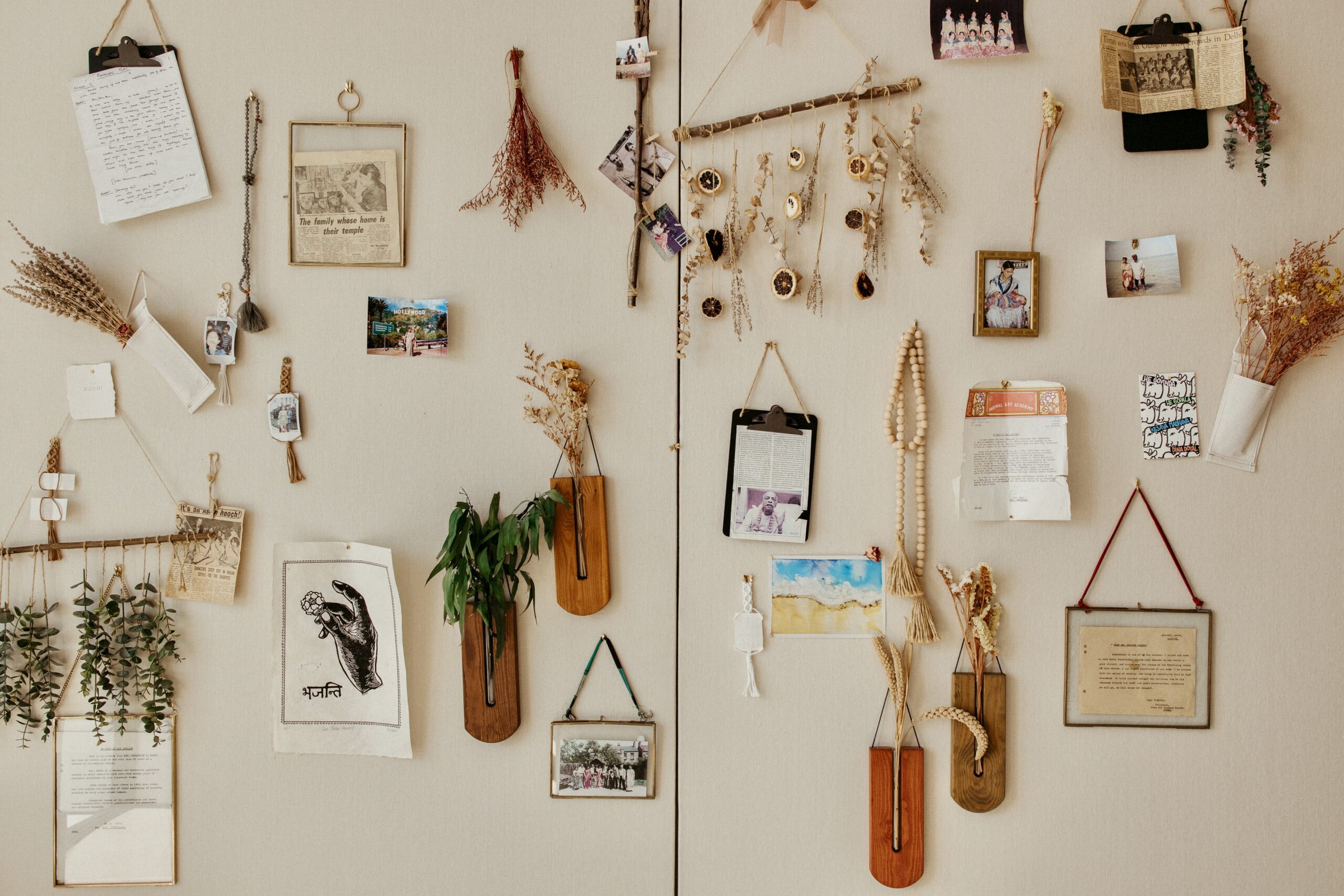
I taped this line from a book I read that month to my vision board:
“At times I feel my body has betrayed the girl I was, growing past the lithe limbs hewn in independence. We are to be fit for the purposes of adulthood, I know this. Childhood anticipations are traded with the shouldering of heavier things. But these days, these stones-tossed-in-tall-grass days, have stretched my muscles, recalled past forms, and I am remembering how it is to feel, to follow the instincts of something young yet ancient. To step outside the province of maturity and marvel.”
May we all step outside the noise—and marvel.

More from this issue
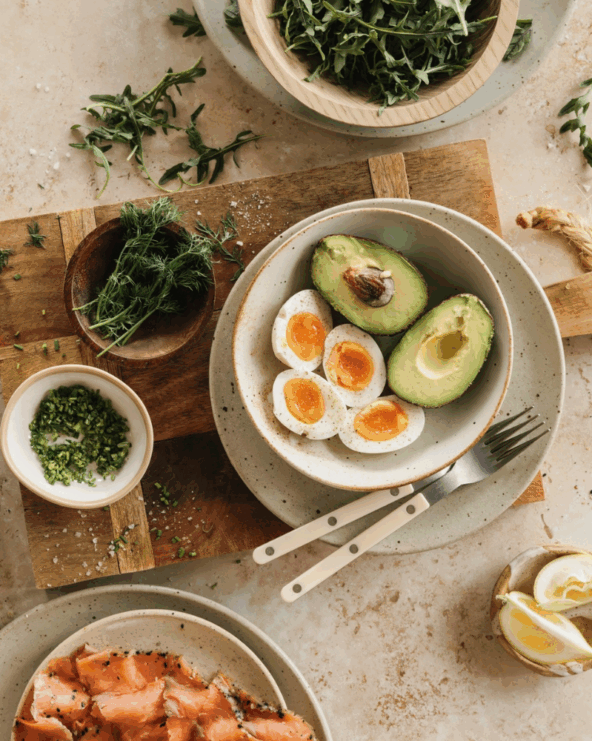
Cooking for Clarity: Recipes for Focus and Fuel
Brain food, pure and simple.

How to Do the Ultimate Spring Pantry Reset
What to clear out, what to restock, and what you truly don’t need.
The Power of One: Decorating With Intention
The “less but bigger” decorating rule designers swear by.