


Photography by Michelle Nash
I first met Adriene Mishler in the most wellness-y way possible: mid-sweat, on the reformer next to me in a Pilates class. We were both doing that thing where you’re trying to stay composed while your core is actively shaking—when she leaned over, introduced herself, and told me she’d been following my work for a while. I smiled and told her I’d been following hers, too. It could’ve ended as a quick exchange, but after class, we ended up standing in the parking lot, lingering like old friends who’d run into each other at exactly the right moment.
In my line of work, I meet plenty of people whose on-screen persona feels bigger than they seem in real life. Adriene’s presence is different: calm, playful, and grounded. Someone who doesn’t seem interested in performing “wisdom,” but in actually living it. Being around her felt like permission to let my guard down.

“It’s never just yes or no. It’s always: how is it going to feel?”
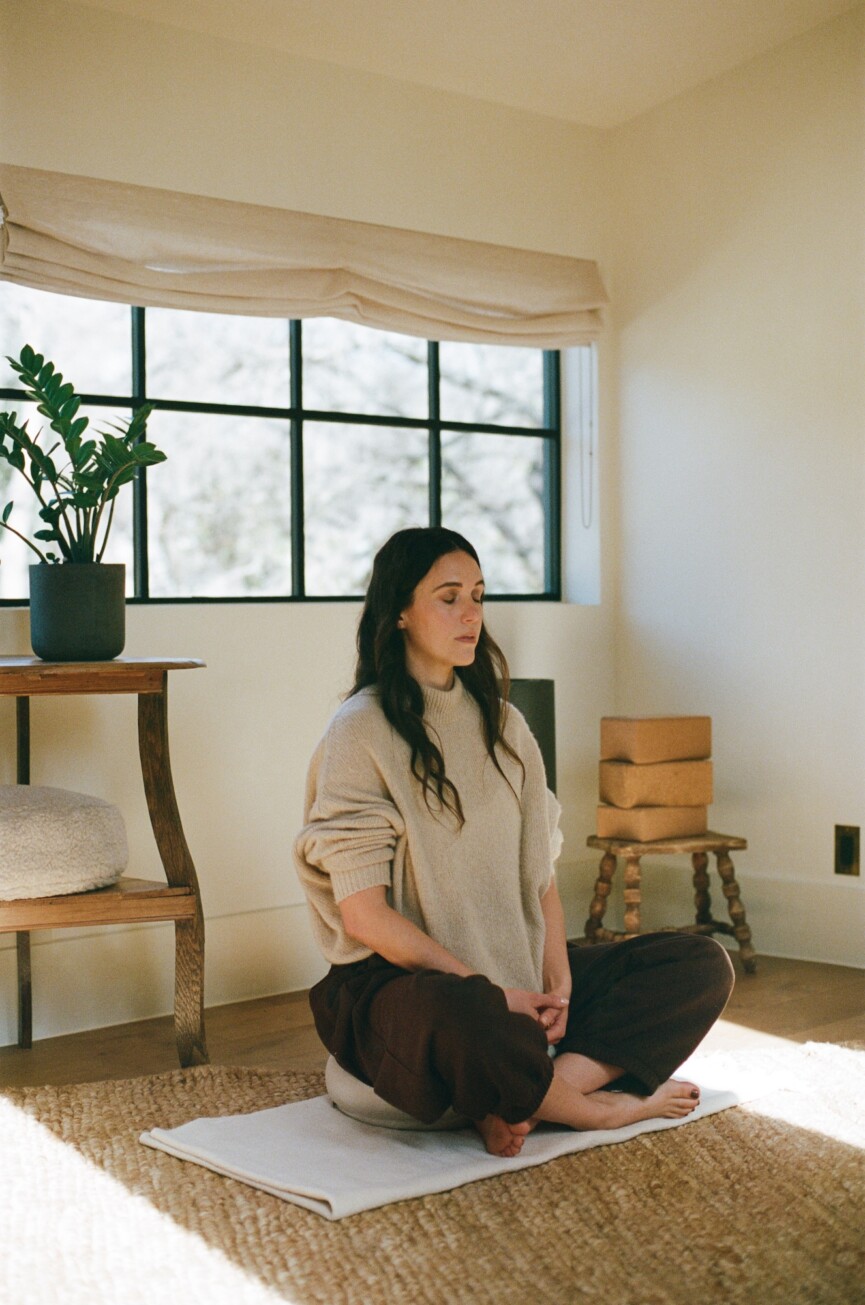
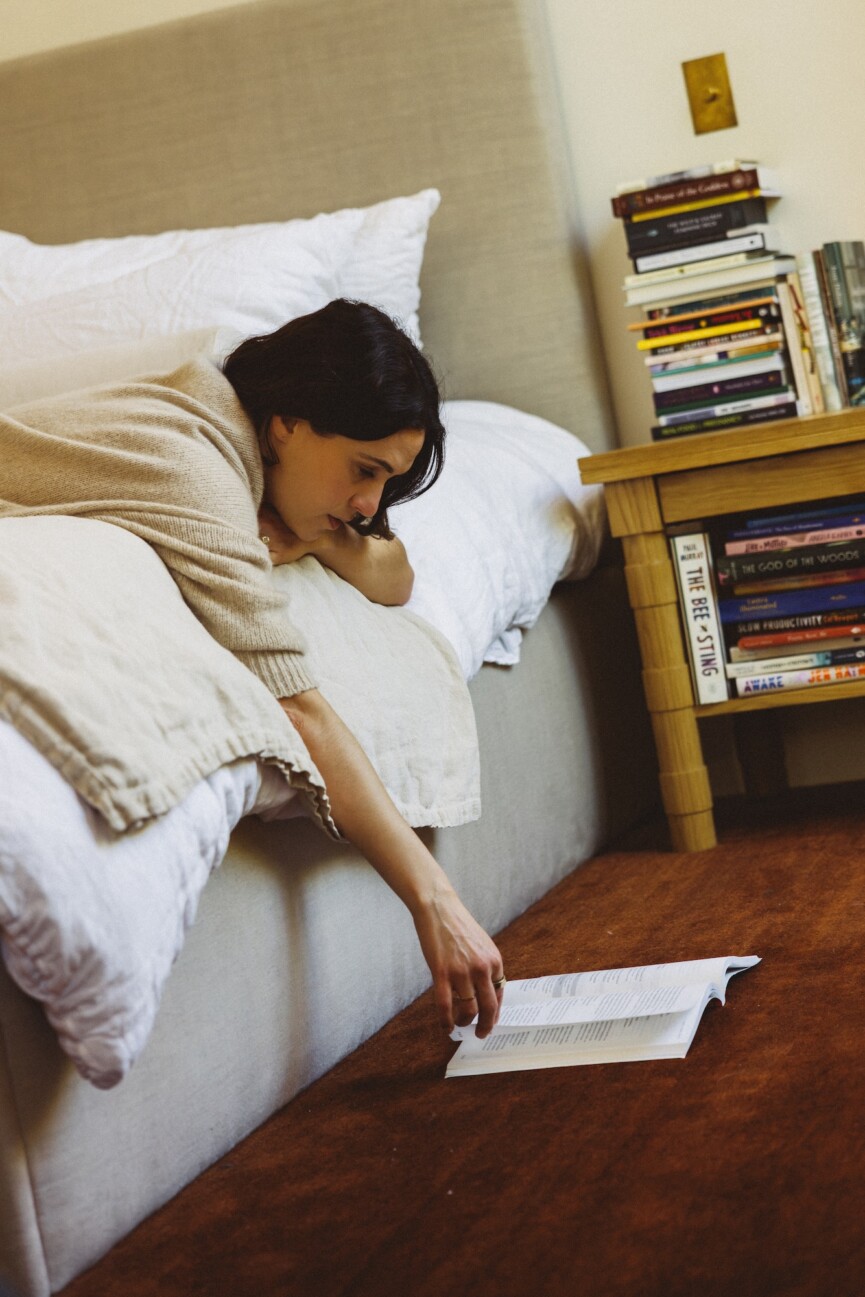
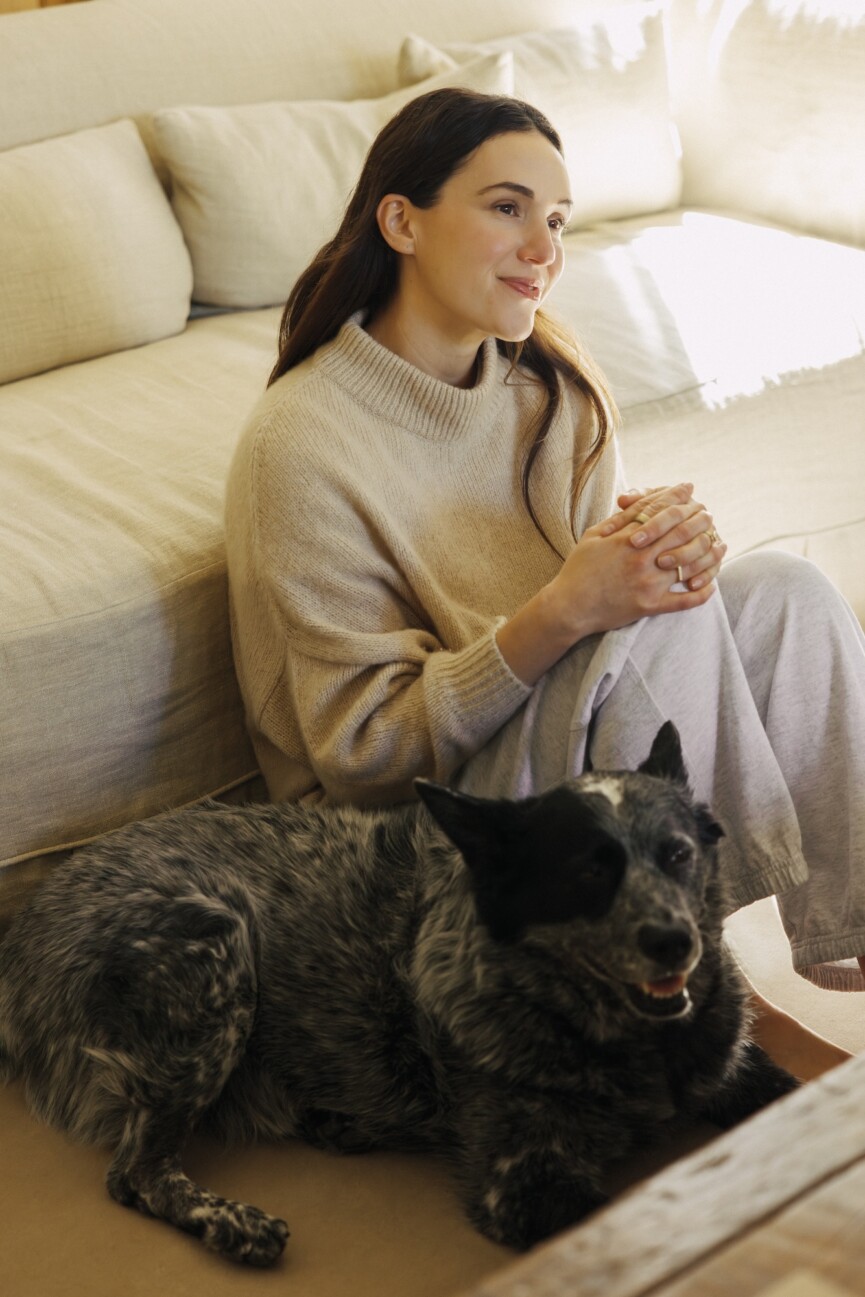
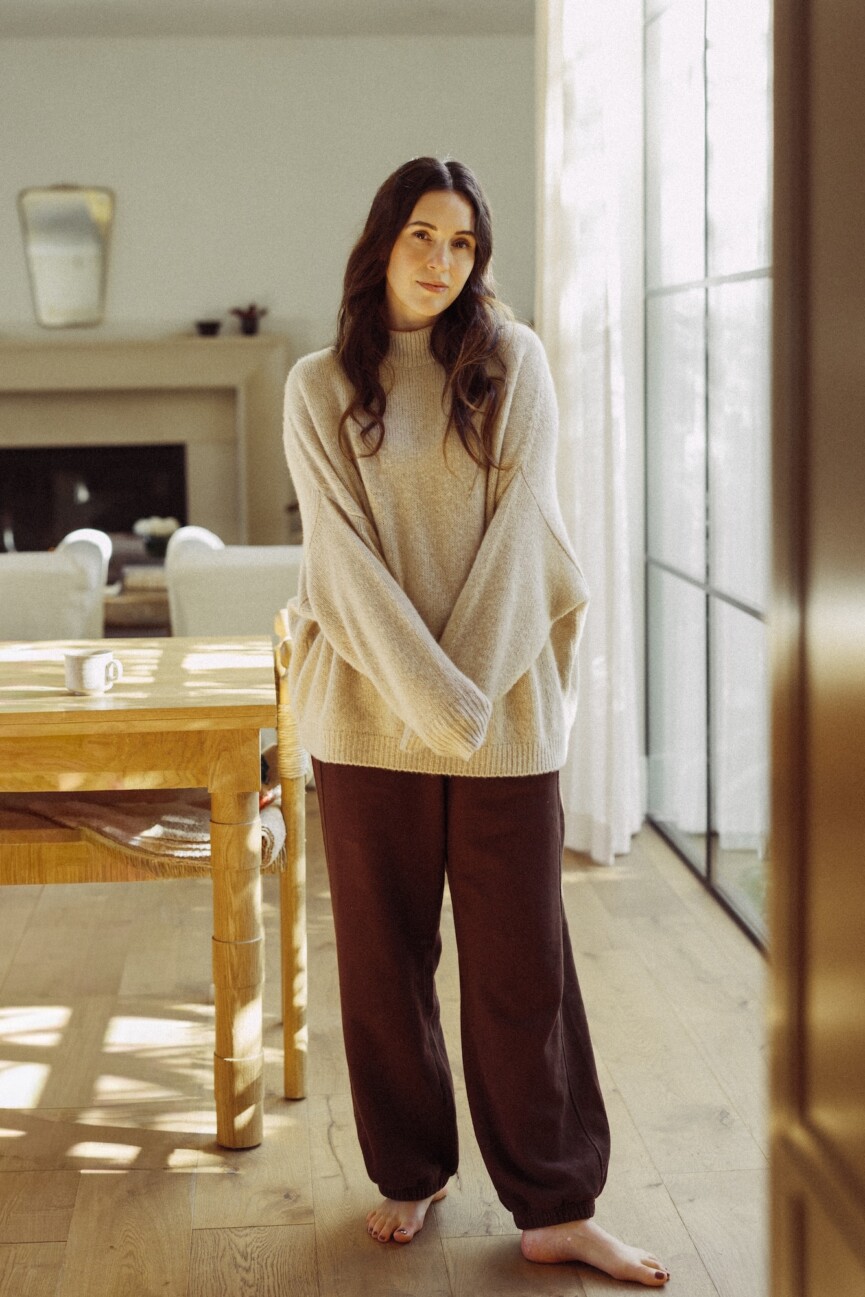
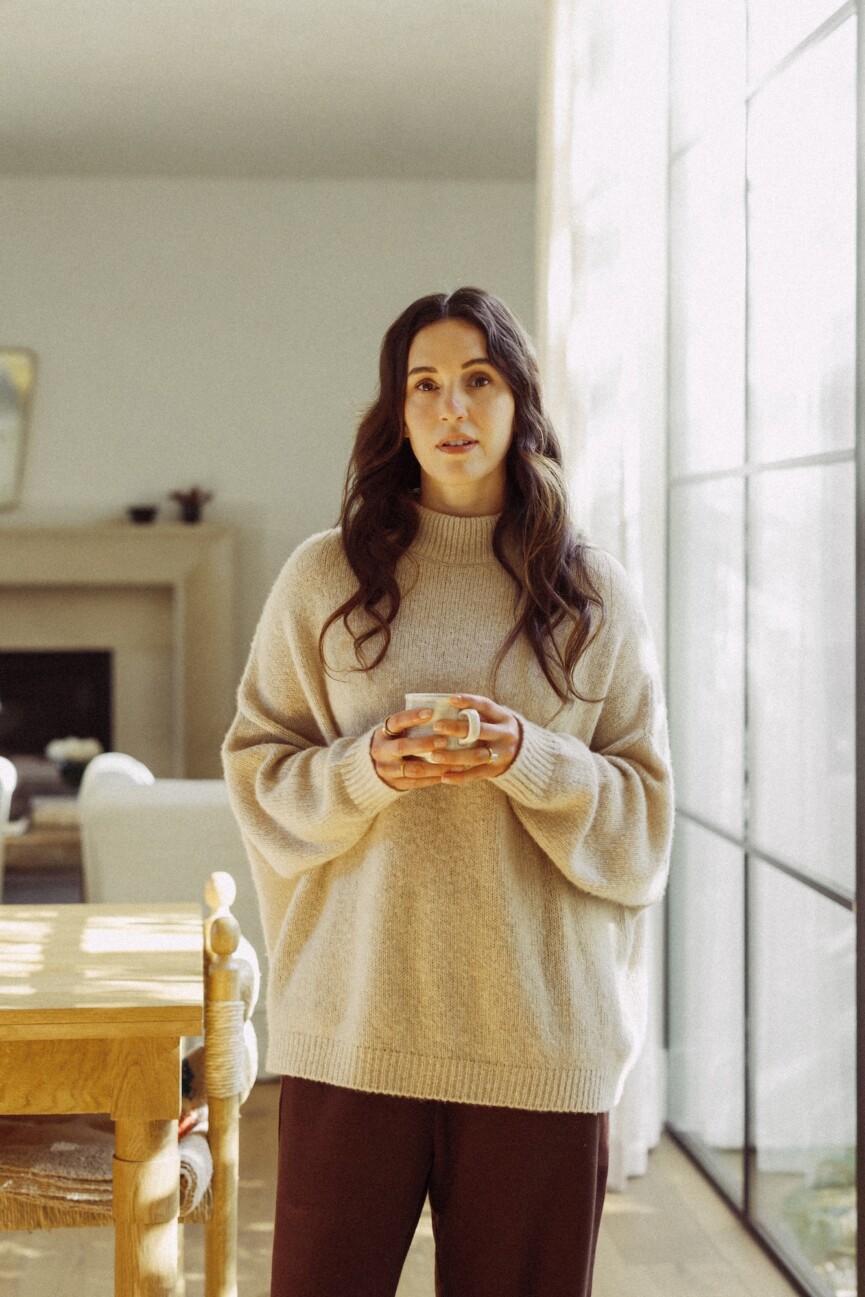
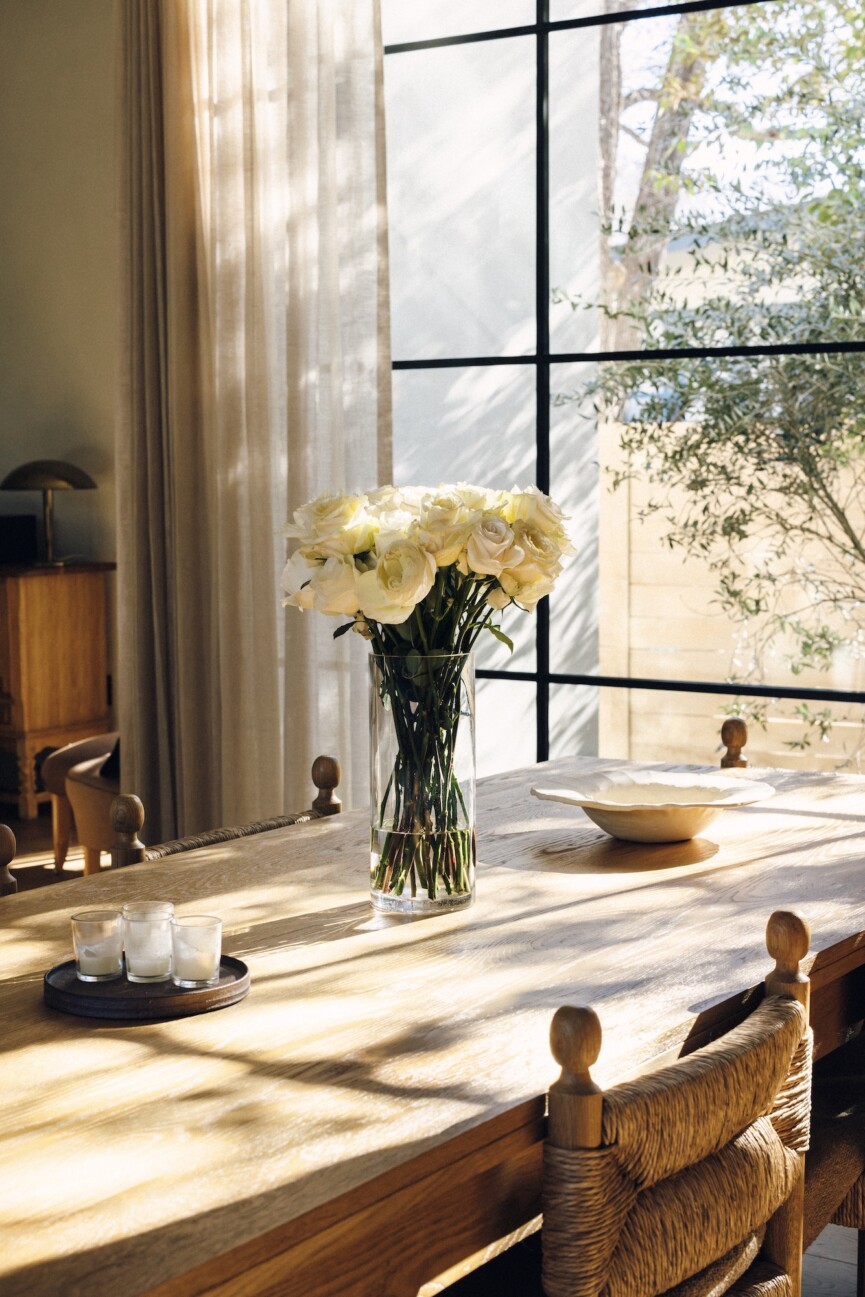
That steady, unforced quality is exactly why I wanted Adriene on the cover of our March issue devoted to clarity. Our team spent a morning at her peaceful home in Austin, photographing the daily practices that help her feel grounded—complete with Benji (her YouTube-famous dog) providing a few perfectly-timed reminders that even the calmest homes can embrace a touch of chaos.
A week later, Adriene and I caught up over Zoom to talk about clarity across the full spectrum of her life: how she built an enduring platform without losing its heart, how her relationship with “finding what feels good” has matured, and why she’s learning to be nourished not just by solitude—but by the connected moments in everyday life.





Clarity Begins with Devotion
It’s tempting to look at Yoga With Adriene—one of the most successful wellness platforms of the past decade—and assume it began with a master plan. The true story, as I learned, is more layered.
“When I started my YouTube channel, I was juggling multiple jobs,” she explains. “I was a working actor and also a part-time drama teacher.” Yoga, for her, was the through-line. “Any gig I had, the one constant was that I was showing up and then inviting all of my friends to come to my yoga classes. Anyone who knew me knew that yoga was what I was doing in my off hours.”
The vision for starting on YouTube originated with her business partner, Chris Sharpe, who had already built a successful cooking channel with his wife. “It was Chris’s idea to see if we could create an educational channel that could help us quit our multiple day jobs so I could focus on being a creator.” Adriene’s role was showing up with devotion to the practice itself. “I was already inviting anyone and everyone,” she said. “I just wanted them to experience what I was experiencing through yoga.”
It wasn’t a single viral moment that grew her platform into what it is today—it was the slow accumulation of consistently showing up. By 2015, the channel was gaining momentum, and her community was engaging and sharing how it had changed their lives. She and Chris saw a real opportunity to make it an enduring company and brand.
As the audience grew, she faced a quieter challenge: how to protect the original heart of the work as it began to scale. She was deeply aware of the tension between what yoga had meant to her—traditional and sacred—and what it might become online. “I remember feeling slightly panicky,” she told me. “Is this allowed? Are my mentors going to look down on this?”
In the end, her solution was simple and strong: stay honest, and stay focused on the connection with her community. That filter hasn’t changed, even as the stakes have. When she’s evaluating a new opportunity, “It’s never just yes or no. It’s always: how is it going to feel? Is it truthful?”
She describes that much of her mindset didn’t come from yoga, but from theater. In her early twenties, she trained in a company that worked as an ensemble, where work was co-created, and precision was required. What she carried from the theater wasn’t perfectionism—it was the idea that people can feel what you’ve tended to, even if they can’t name it. “Every word, every intonation matters,” she told me. “You can consider the effect on how someone may feel just by paying attention to all the little details.” In her teaching, she loves the same behind-the-scenes challenge of creating something that seems effortless to the audience, in a way they may not notice, but they’re sure to feel.


Clarity is a Practice
If you’ve ever practiced with Adriene, you’ve heard the phrase: find what feels good. It’s become a global shorthand for self-trust, but Adriene’s definition of what it means has evolved through the years. It began as a mantra when she’d invite her friends to practice yoga, wanting them to experience something that had changed her life. As her community expanded rapidly during the pandemic, the phrase took on a new meaning.
“Everyone was going through a lot of hard stuff then, and they still are now. That time leveled me up and matured me.” She feels a responsibility to protect the nuance of the phrase. “We need to highlight the word find. Yogic living is about showing up and being committed to the search. It’s not about escaping and feeling good all the time. It’s about finding a balance of the difficult and the sweet. And then finding yourself in that, and seeing what ripple effect you can create.”
“My whole life’s work is about the body and the spirit. And yet I didn’t recognize the signs.”
Clarity is Found in Stillness
Even with a career devoted to teaching people how to listen to their bodies, Adriene is open about the moment when her own body forced her to listen. In 2022, she was on a trip to Mexico City and noticed something was off. One morning, she lost vision in one eye and was taken in an ambulance to a local hospital, convinced it was a blood clot or a heart attack. After running tests, they sent her to a psychiatrist who diagnosed it as a panic attack.
What struck her was how much the episode revealed. “My whole life’s work is about the body and the spirit. And yet I didn’t recognize the signs. It forced me to do some serious work.”
Rather than a quick recovery, she began a long path of regulating that happened slowly over time. During that period, she experienced symptoms that felt out of character, like feeling claustrophobic while hiking on a trail (her usual happy place). Adriene’s goal in sharing her experience isn’t so much a cautionary tale as it is a truth: the body keeps score whether we realize it or not.
When I asked what helps her stay regulated now, rather than share a list of hacks, she said it begins with awareness. “The first thing is just being able to notice. Your baseline is here. You’re here. The first piece is listening.”
Recently, she was driving in traffic when another car merged quickly into her lane in a way that demanded a fast reaction. “I could feel this ‘zing’ in my hands and arms.” That moment of noticing, without dismissing, is part of her recovery practice now: “Keeping tabs on what my body’s trying to tell me.”
From there, she named some of her tangible tools: “An Epsom salt bath—don’t sleep on that. Taking the phone out of my bedroom has also been a major shift. I put my Do Not Disturb on at 9 pm and let it charge in my bathroom.”
And her mornings are sacred. “The time in the morning when it’s quiet is so important for me. I’ve also been experimenting with bringing that same nervous-system care into evenings, incorporating 30 minutes of silence before bed.”


When I asked about her relationship with silence, she smiled and shared that, in a culture obsessed with constant self-optimization, silence is the missing ingredient that makes all our efforts actually land. She’s learning to “befriend the quiet again, instead of always enriching myself. Because silence itself is so enriching and healing and restorative. It helps us integrate everything that came before.”
I ended our conversation by asking what she’s simplifying this spring. She paused for a few seconds and then said, “I’ve got to be honest: it’s just not a very simple spring.” Then she shared what was actually top of mind: returning to a simple form of nourishment. “We have this beautiful kitchen, and we both love to cook. And yet we’ve fallen into a habit of ordering way too many meals.”
“I’d like to return to simplifying what it means to nourish ourselves in our kitchen. I need to get back on a CSA box to inspire me to use all that fresh produce. It doesn’t have to be complicated—just get some nice whole foods on the plate, say a blessing, and then notice how much better you feel.”

More from this issue

A 7-Day Reset for a Calmer, Clearer Spring
Your nervous system will thank you.
The Power of Fewer Inputs
How quieting the noise helps you hear yourself again.
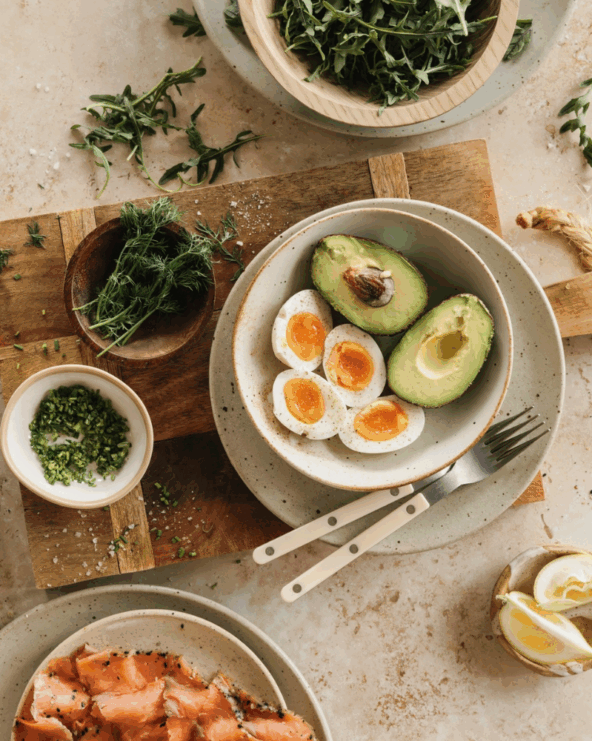
Cooking for Clarity: Recipes for Focus and Fuel
Brain food, pure and simple.