


Fall is for layering. Layering your favorite capsule closet pieces, layering scents, and layering blankets on top of you on the couch as you curl up for a movie marathon. When it comes to fall beauty, the cooler temperatures bring dry, irritated skin—which means layering moisturizers and serums. But skincare, as many of us are learning, often isn’t a more-is-more game. Curating a skincare routine takes intentionality, especially when juggling active ingredients. High-performance skincare can also make our skin highly reactive. Strategic skincare layering can prevent stressing out our skin microbiome and protect our skin barrier.
We asked a dermatologist which skincare ingredients work symbiotically and what skincare ingredients not to mix. The result, this handy skincare ingredients layering chart to help us decode your products and practice safe skin-care layering.
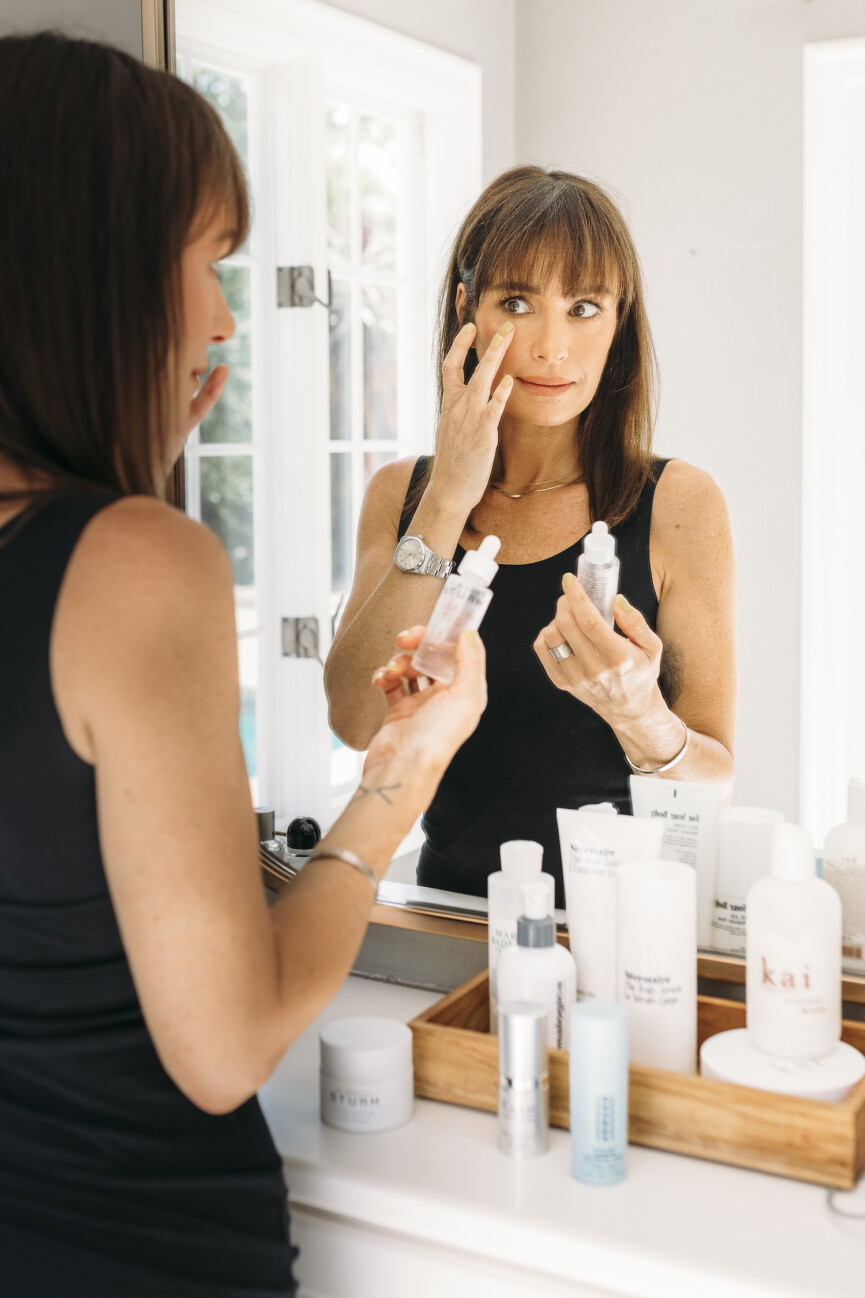
Featured image by Michelle Nash from our Wake Up Call With Sanetra Longno

First Things First: How to Build a Skincare Routine
I’ll be the first to admit: The skincare I do in the summer could hardly be called a routine. Though I’m fastidious about my sunscreen application (and reapplication!), it can sometimes feel too hot to do more than the basics.
But now that fall is calling us back to routine, I asked board-certified director Dr. Mona Foad what we should actually be using (a bit of a skincare capsule closet, if you will)—and in what order.
“The rule I give patients is simple: Go from thinnest to thickest consistency,” says Dr. Foad. “Start with cleanser, then toner, then any water-based treatments like serums, then thicker creams, and finish with sunscreen in the morning or, at night, a facial oil, if you use one.”
If you’re trying to get back into a more consistent skincare routine, Dr. Foad says the best routine is one you can stick to. “The bottom line is that consistency in your routine matters just as much as the products themselves.”
Your Skincare Layering Routine, According to a Derm
There’s a reason that skincare layering is important: It makes sure you’re getting the most out of your products.
According to Dr. Foad, “Thinner, more active-rich formulas need direct contact with the skin to penetrate and work, and if you apply a heavy moisturizer first, you’re blocking everything else from absorbing properly.”
The order Dr. Foad generally recommends is:
- Cleanser
- Toner or essence
- Antioxidant serum (like vitamin C) in the morning
- Treatment actives (like retinol) at night
- Eye cream
- Moisturizer
- SPF during the day
- Face oil at night
Skincare Layering for Mature Skin: What to Know?
When it comes to mature skincare, Dr. Foad recommends collagen support and barrier strength—plus extra moisturization with richer products.
For this, she says you can’t go wrong with retinol. “Retinoids remain the gold standard for stimulating collagen production, so that’s usually the foundation of an evening routine, paired with a rich moisturizer to offset dryness.”
“I recommend a vitamin C serum for antioxidant protection, followed by a peptide-rich moisturizer and broad-spectrum SPF,” says Dr. Foad. “Layering in a hyaluronic acid serum underneath moisturizer can also make a real difference.”
Can You Layer Skincare for Sensitive Skin?
Whether your skin is generally sensitive or if it is damaged from a disrupted skin barrier, layering skincare ingredients can either help or hurt your skin.
Depending on what is causing your sensitivity (be it fragrance, over-exfoliation, or allergies), what ingredients your skin can tolerate will look different.
If you don’t know what sets your skin off, Dr. Foad recommends consulting a derm and simplifying your skincare routine, adding new products one at a time to see how your skin reacts. “Introduce one active ingredient at a time, give the skin a couple of weeks to adjust, and build the routine slowly from there.”
Stick to the basics, says Dr. Foad. “Start with a gentle cleanser, followed by a fragrance-free hydrating toner, then a barrier-supporting serum with ingredients like niacinamide or ceramides, and finish with a rich, simple moisturizer and mineral sunscreen.”
The Ultimate Ingredient Layering Chart
Ahead, Dr. Foad breaks down what skincare ingredients not to mix in this chart for how to layer your retinol, vitamin C, AHAs, BHAs, peptides, niacinamide, azelaic acid, and benzoyl peroxide.
Retinol
What to layer with retinol: Peptides, niacinamide, and hyaluronic acid, all of which help offset the dryness and irritation that retinol can cause while supporting collagen production.
What not to mix with retinol: I do not recommend combining retinol with vitamin C, AHAs, or BHAs in the same application, since layering multiple active exfoliants can overwhelm the skin barrier. I tell patients to use retinol at night and save vitamin C and acids for the morning.
Vitamin C
What to mix with vitamin C: Vitamin C is most effective when paired with vitamin E and ferulic acid, which stabilize it and boost its antioxidant power. It also works well with sunscreen, as it enhances your protection against UV damage.
What not to mix with vitamin C: I don’t recommend layering it directly with benzoyl peroxide, since benzoyl peroxide can oxidize and deactivate vitamin C.
AHAs
What to mix with AHAs: AHAs like glycolic acid pair well with hydrating ingredients like hyaluronic acid and ceramides to offset dryness.
What not to mix with AHAs: I don’t recommend combining AHAs with retinol or vitamin C on the same night, since that’s simply too much active exfoliation and increases the risk of irritation and barrier compromise.
BHAs
What to mix with BHAs: BHAs, primarily salicylic acid, work well alongside niacinamide, which calms inflammation while the BHA clears the pore.
What not to mix with BHAs: Like AHAs, I recommend keeping BHAs separate from retinol in the same application.
Peptides
What to mix with peptides: Peptides are one of the easiest ingredients to layer with almost anything. They work particularly well with retinol, vitamin C, and hyaluronic acid.
What not to mix with peptides: I don’t see meaningful conflicts with peptides and other actives.
Niacinamide
What to mix with niacinamide: Niacinamide is my favorite ingredient to recommend because it plays well with nearly everything, including retinol, vitamin C, and acids. It helps strengthen the skin barrier and reduce irritation from stronger actives, which makes the whole routine more tolerable.
Azelaic Acid
What to mix with azelaic acid: Azelaic acid pairs nicely with niacinamide and is generally well-tolerated alongside most other ingredients. I do recommend introducing it gradually if combining with retinol, since both target cell turnover.
Benzoyl Peroxide
Benzoyl peroxide is the ingredient I’m most careful about layering. Beyond deactivating vitamin C, it can also reduce the efficacy of certain retinoids if applied at the same time, so I recommend using benzoyl peroxide and retinol at different times of day, and always following with a good moisturizer since they can be drying.