
We may receive a portion of sales if you purchase a product through a link in this article.
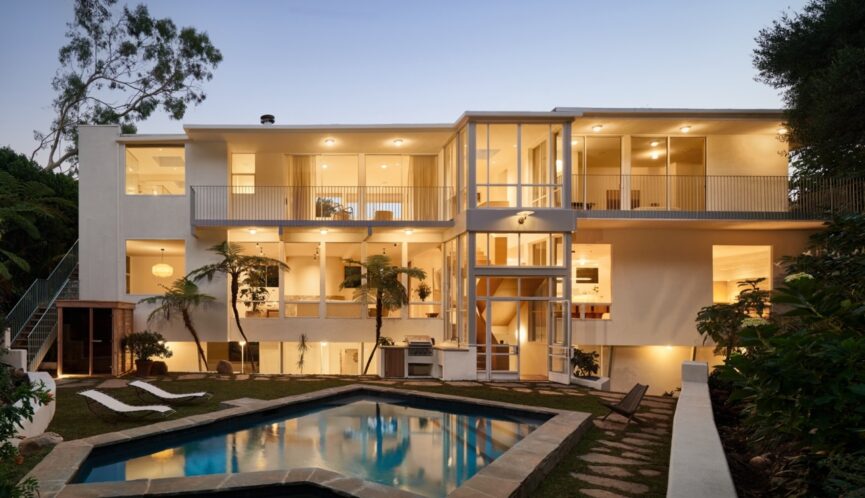
Some homes announce themselves immediately. Others ask you to slow down. Tucked behind gates and layers of greenery in Brentwood, Benmore Terrace belongs to the latter. You don’t arrive at this house so much as you move through it—past a sequence of landscape, light, and quiet intention—until the architecture reveals itself. Designed in 1960 by A. Quincy Jones and Frederick Emmons, the home feels less like a moment preserved in time and more like an ongoing conversation between structure and nature.
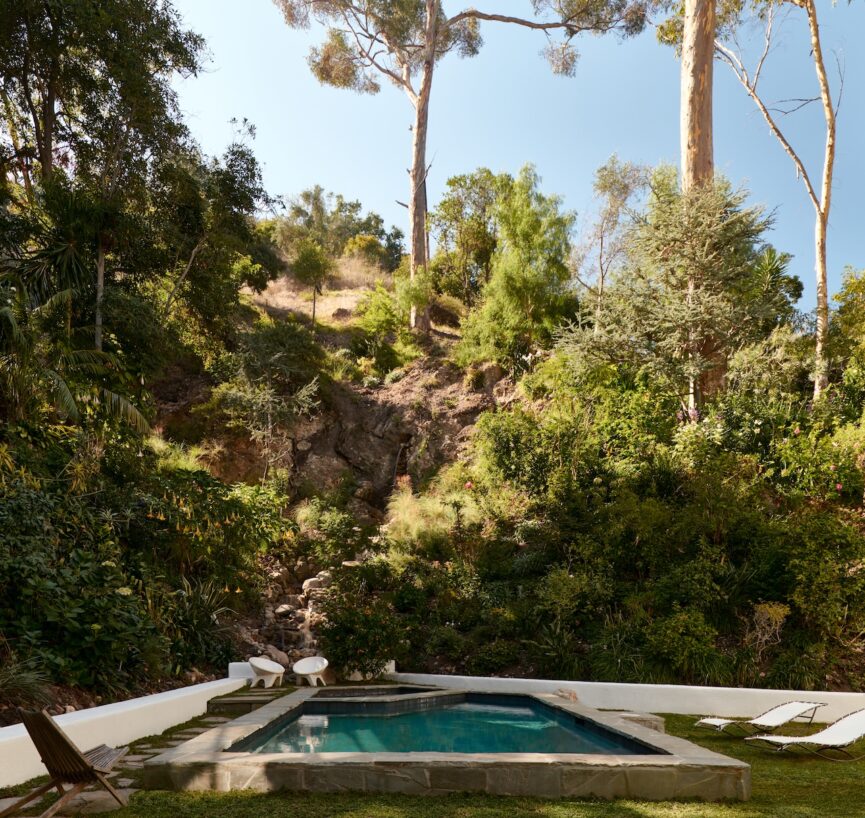
Originally commissioned by developer Sarah Jane Lapin, Benmore Terrace was designed to reward movement rather than spectacle. Set on nearly an acre, the house reframes traditional ideas of front and back, guiding you inward toward expansive glass, hillside views, and a waterfall that feels integral to the home rather than an added feature. Light and openness choreograph daily life here, blurring the boundary between indoors and out in a way that still feels modern.

Claire O’Connor is the founder and visionary behind O’Connor Estates – a Los Angeles-based real estate and development firm redefining modern luxury through soul, storytelling, and design. Claire’s approach focuses on fewer, better homes that align deeply with her vision for quality, connection, and emotional resonance.



When investor and real estate agent Claire O’Connor encountered the property, she wasn’t searching for a project—she was responding to a feeling. “Benmore was not a house I went hunting for,” she says. “It was a house I stumbled into, and it revealed itself in layers over time.” Even after years of renovation that had dulled its voice, the home’s original architectural DNA—the restraint, the clarity, the way it privileges nature over display—remained intact. Rather than reimagining the house from scratch, Claire saw an opportunity for stewardship.



Why Preservation Matters
What ultimately set Benmore Terrace apart wasn’t just its setting, but the fact that its architectural intent was still legible. The home carries a clear point of view about how modern life in Los Angeles can feel—open, grounded, and deeply connected to the natural world.
“Knowing it was a Jones and Emmons house commissioned by Sarah Jane Lapin came with a responsibility,” Claire explains. “You are not just updating a property. You are stewarding an idea about how modern living can feel in Los Angeles.” While the home’s bones remained strong, a 1990s renovation had obscured that clarity, layering on finishes that muted the architecture’s voice.
Working with Jesse Rudolph and Joelle Kutner of Ome Dezin, the restoration began with subtraction. Dated elements were removed so the home’s original gestures—light, proportion, and flow—could read again. The goal wasn’t nostalgia, but translation: restoring the architecture’s intent while elevating function for contemporary life.

Designing With Nature
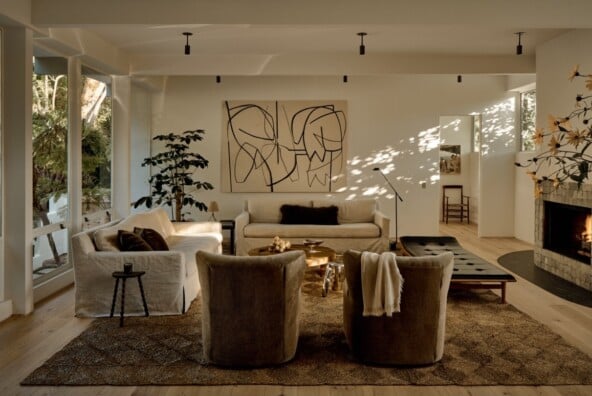
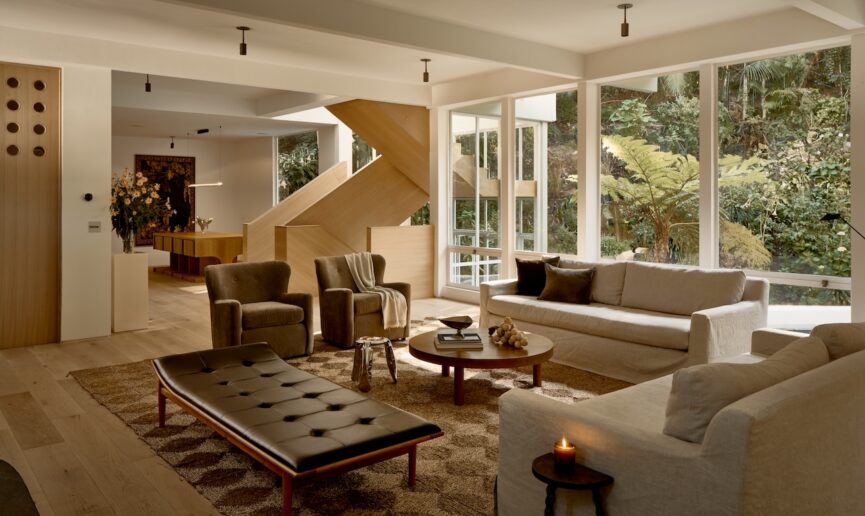
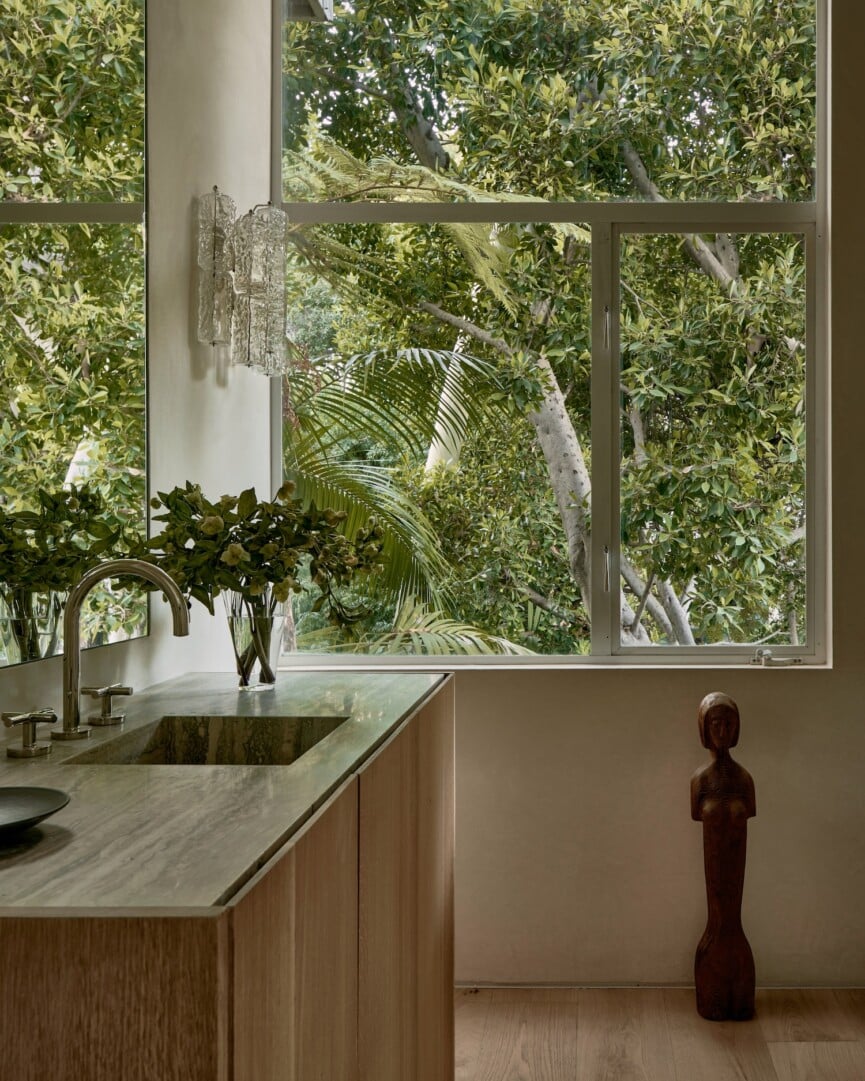
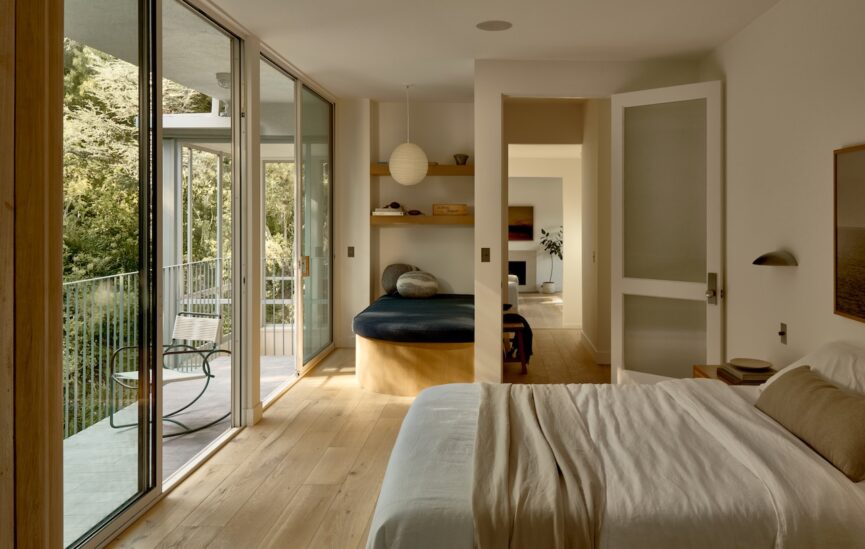
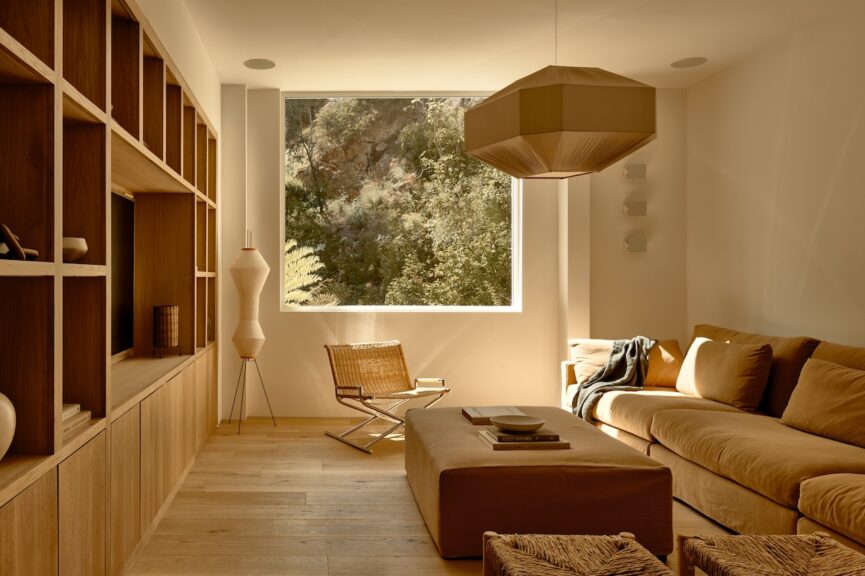
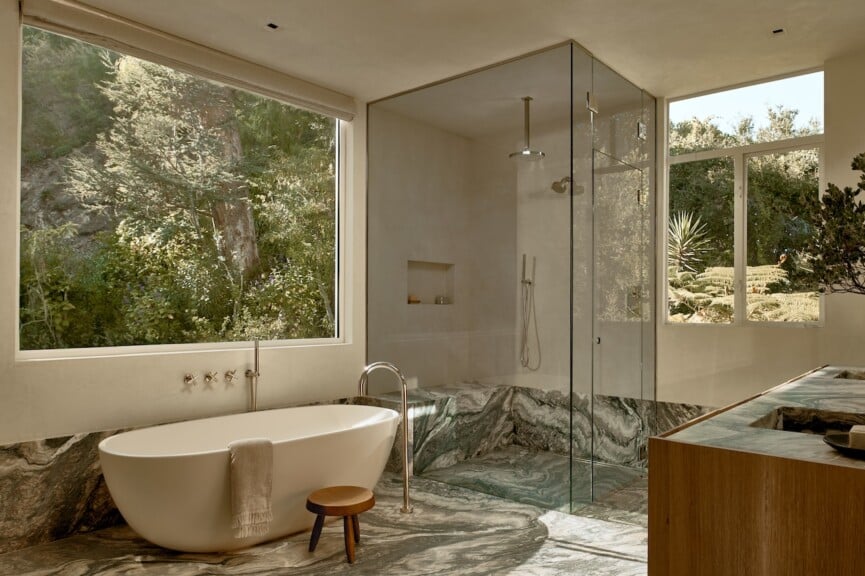
At Benmore Terrace, nature was never treated as an accessory. Expansive fixed windows frame hillside greenery, allowing light to filter through the home throughout the day, while the waterfall’s presence anchors daily life.
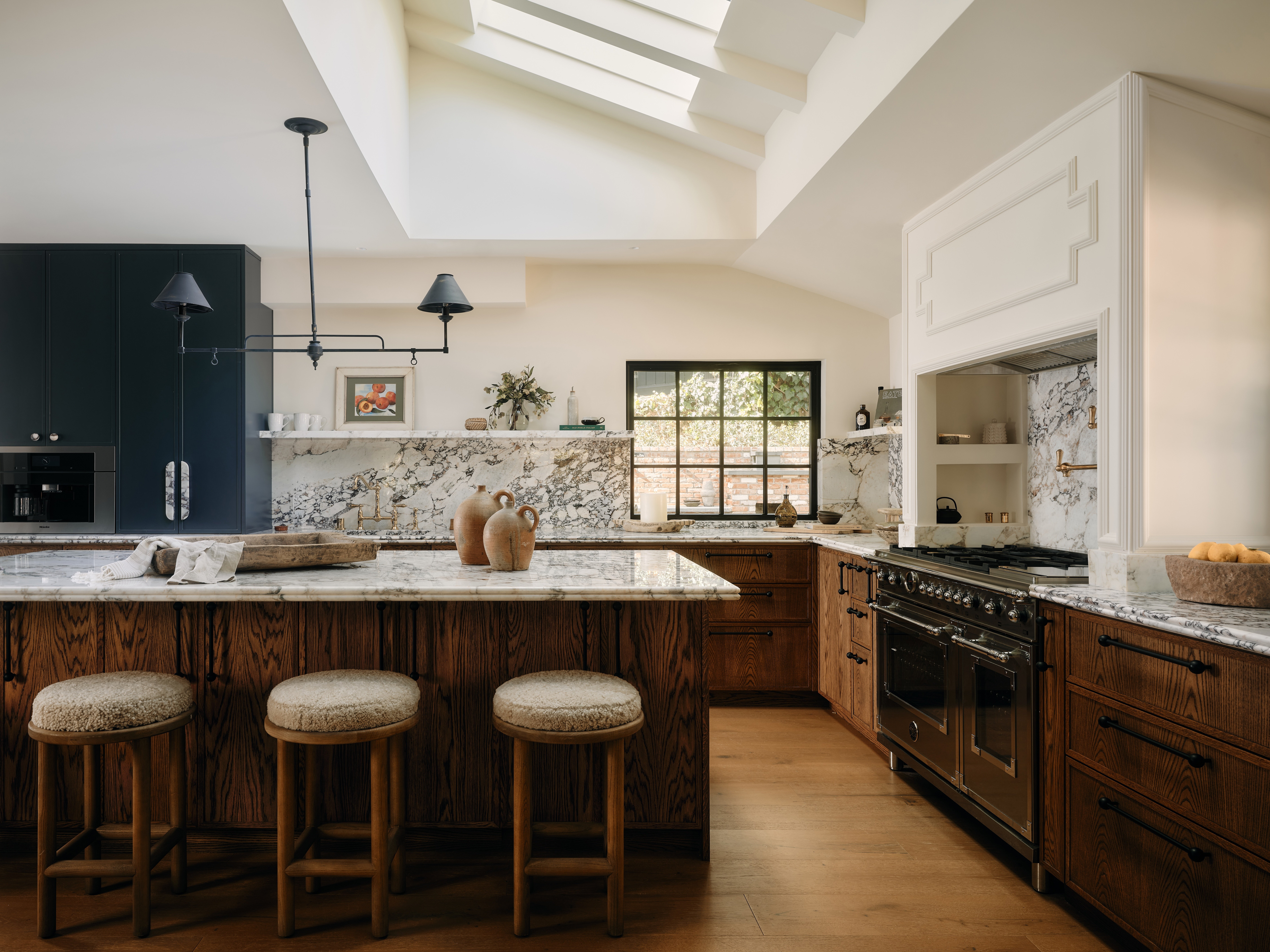
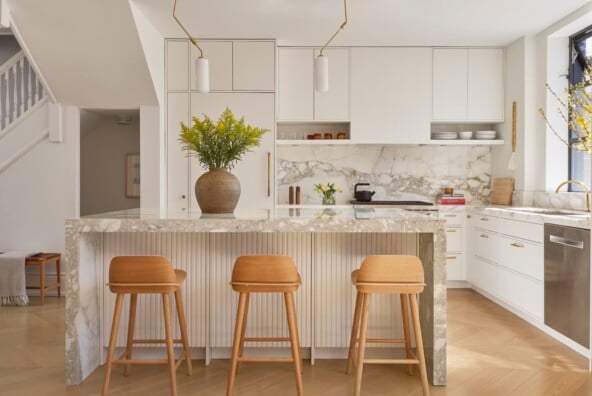
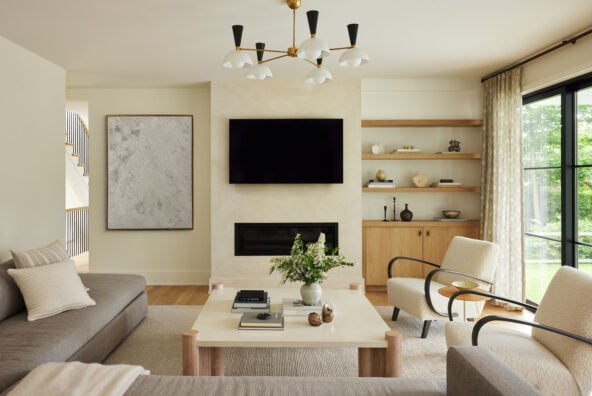
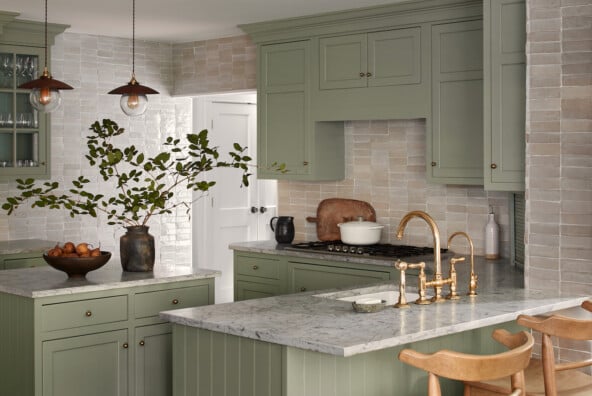
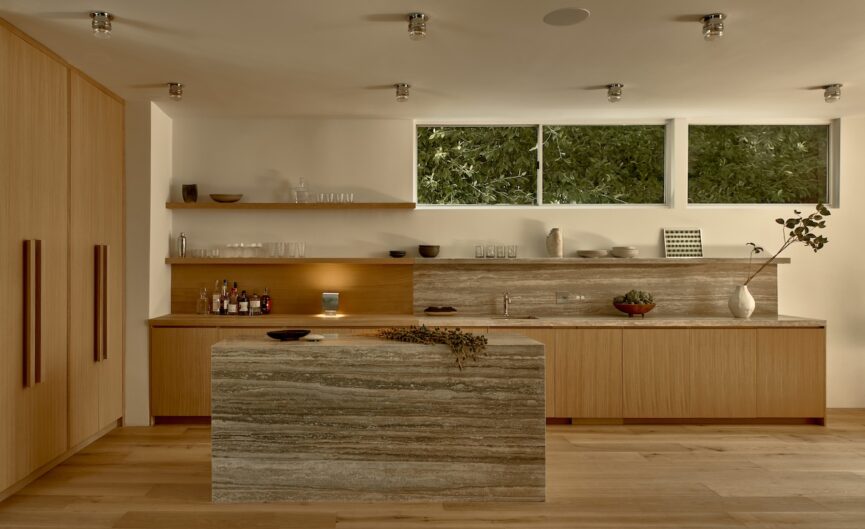
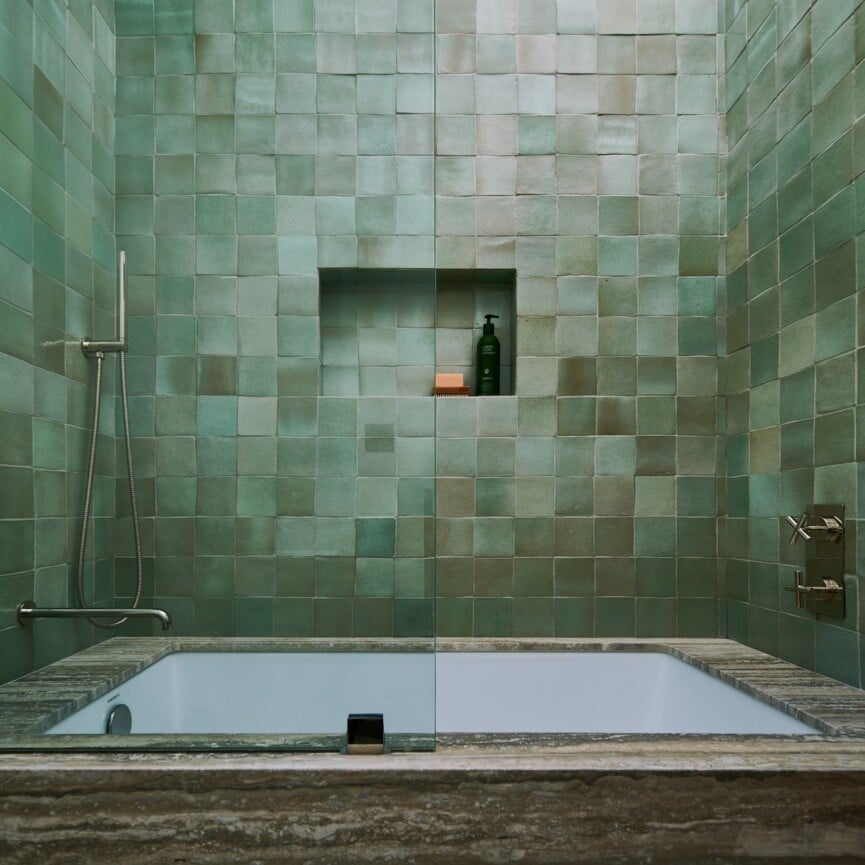
That philosophy guided the interiors. Ome Dezin worked within a neutral palette designed to recede, warming the space with natural woods and grounding it with stone—most notably travertine in the kitchen and bathrooms. These materials don’t compete for attention; they create calm. “Nature was not treated as decoration,” Claire says. “It was treated as a collaborator.” The result is a home that feels deeply attuned to its setting, where interiors act as a backdrop to what’s unfolding just beyond the glass.
Editing With Intention
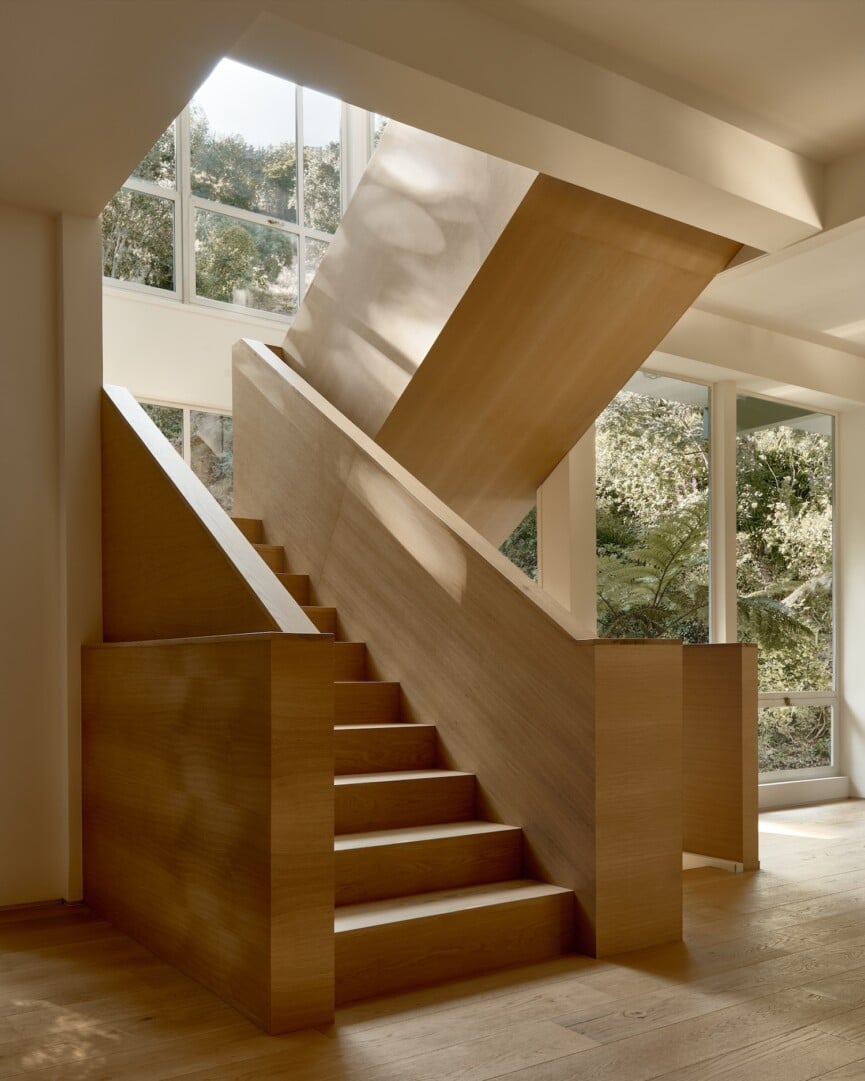
Deciding what to preserve required both reverence and restraint. The home’s fixed glass, skylights, and major glazing moments—central to its identity—were non-negotiable. Where new elements were introduced, they were approached as translations rather than reinventions.
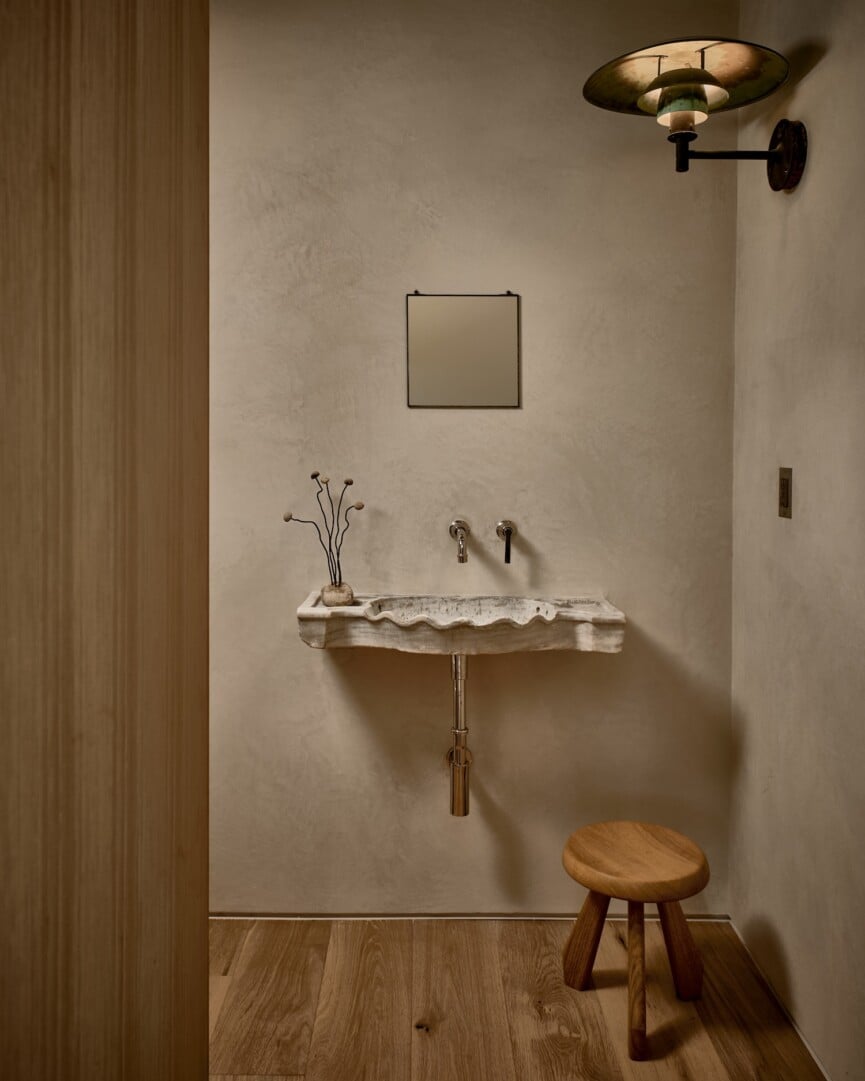
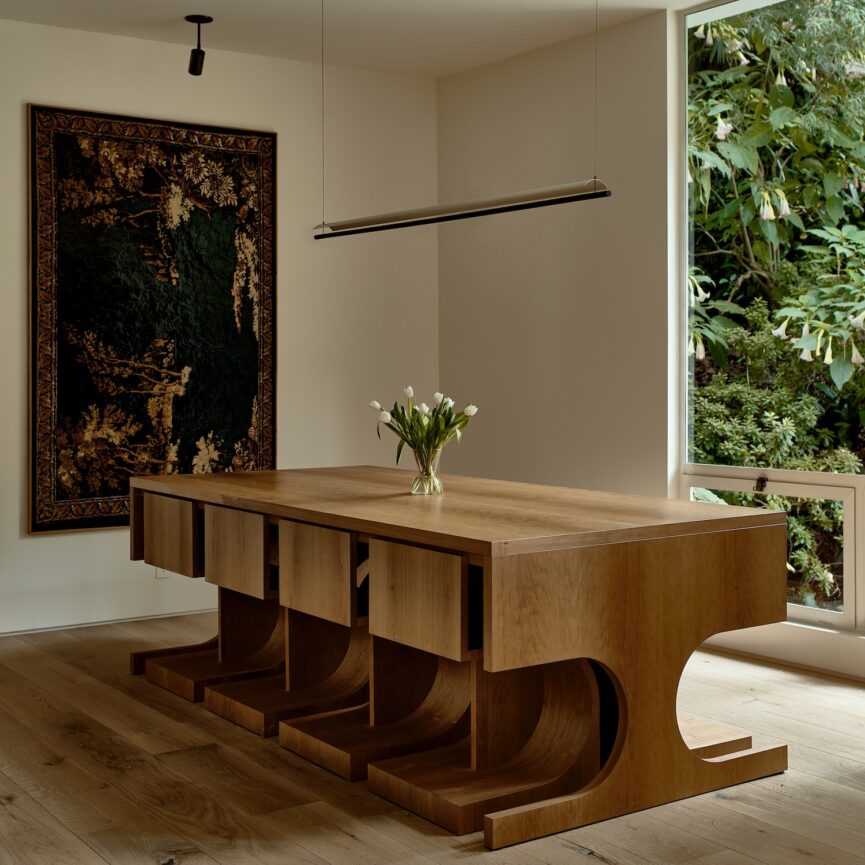
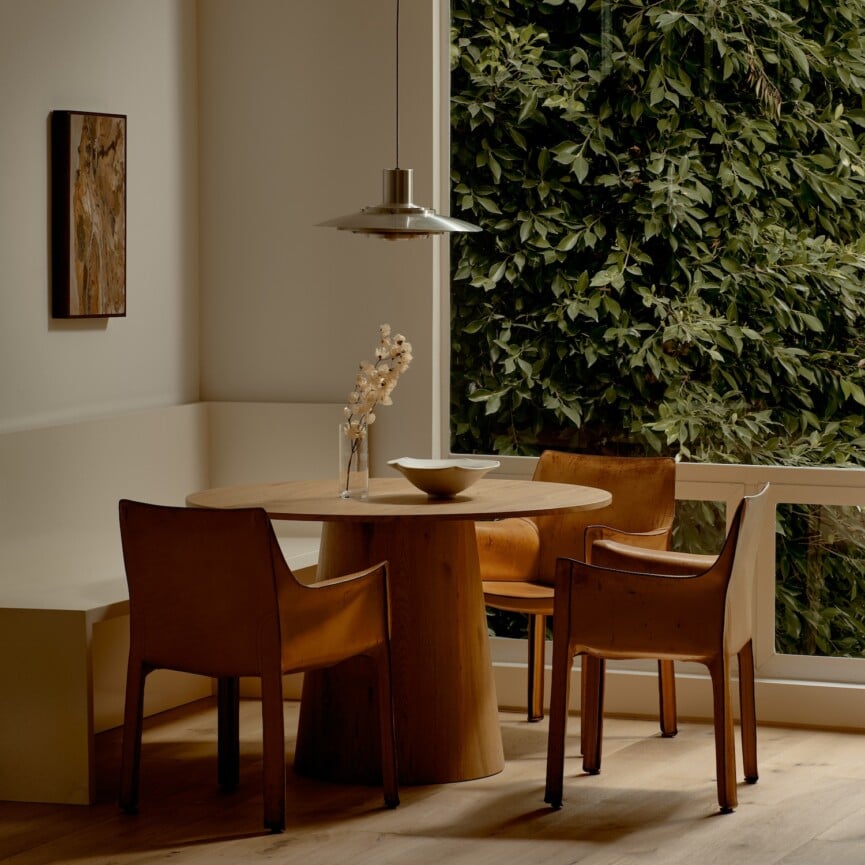
Custom details throughout the home were designed to respond to its scale and rhythm: built-ins, mirrors, and a powder room door crafted to feel seamlessly integrated. In the dining area, a custom table and chairs designed by Claire’s friend Ben Willet fit so naturally within the architecture that they feel inevitable. “In a house like this, value isn’t just about the finish level,” Claire notes. “It’s about protecting the architectural story.”


Letting a Home Find Its People
In a market driven by broad appeal, Claire resists the idea of designing for everyone. “A home isn’t for everybody,” she says. “It’s for somebody.” Interestingly, Benmore Terrace challenged assumptions about who that somebody might be. While the team initially imagined a design-forward buyer, the home ultimately found a young family.
That outcome reinforced a core belief: when a home remains honest to itself, it creates space for true belonging. Benmore Terrace doesn’t try to accommodate everyone. It offers something rarer: a sense of arrival.



Preservation as Responsibility
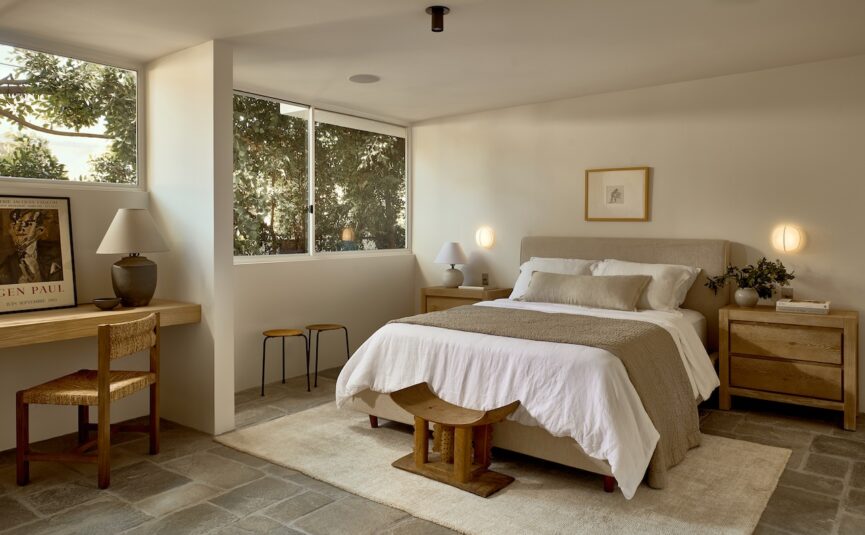
After losing her own home in the Palisades fires, Claire’s relationship to preservation became deeply personal. “Losing a home changes how you understand what a house really is,” she reflects. “So much of it is memory, routine, and refuge—not just materials or square footage.”
In a city where erasure happens quickly, stewardship takes on new urgency. Preserving a home like Benmore Terrace isn’t about freezing it in time—it’s about honoring the ideas embedded within it, and ensuring they endure. In choosing preservation over reinvention, Claire has allowed this singular home to continue its conversation—with nature, with history, and with the people who now call it home.

The Takeaway
Benmore Terrace is a reminder that clarity doesn’t come from adding more—it comes from paying closer attention. When a home remains true to its architecture, setting, and history, it creates space for something deeper than design trends or market appeal. Preservation, at its best, is an act of care: for place, for memory, and for the lives that unfold within it. In choosing restraint over reinvention, Benmore Terrace shows how honoring what already exists can be the most enduring form of modern living.