

In partnership with Graber | Photography by Michelle Nash
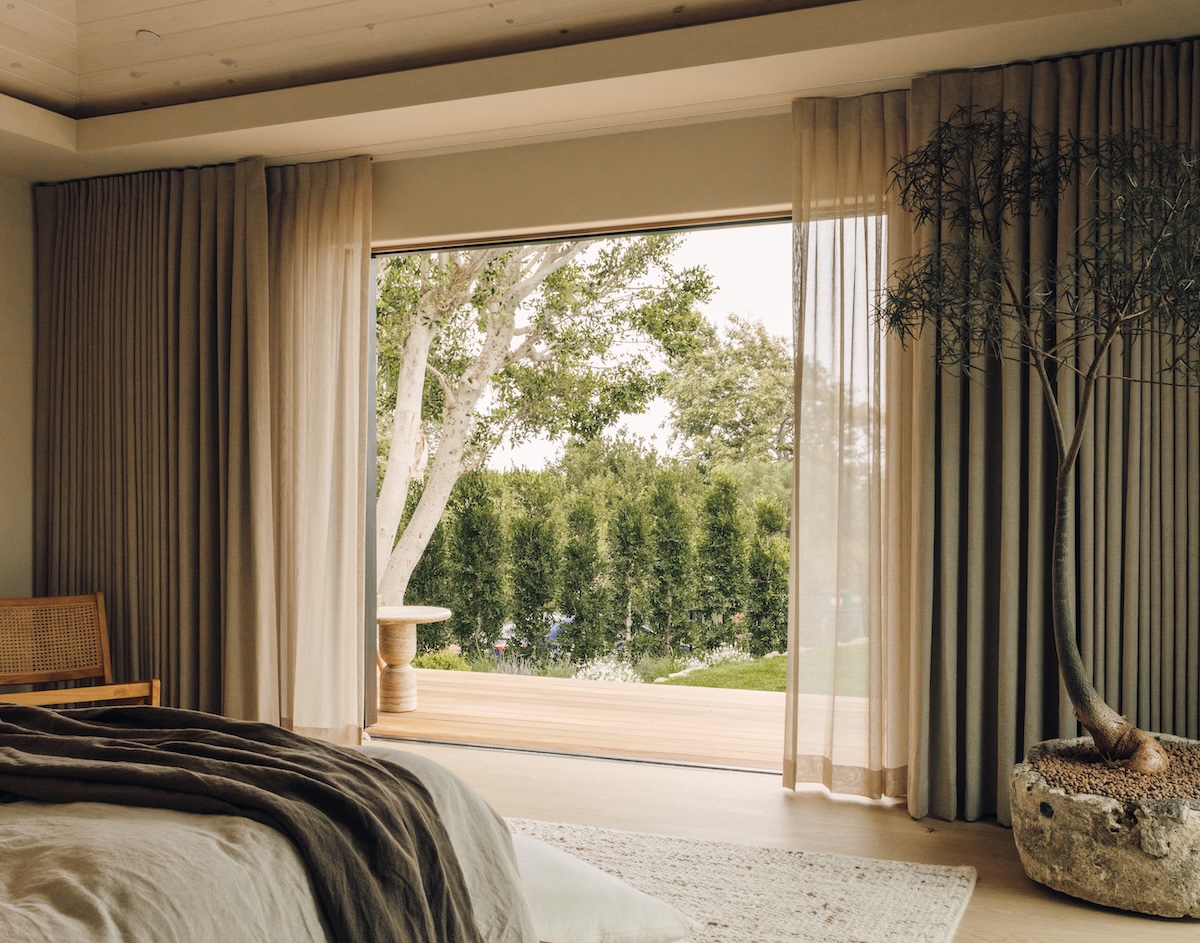
The view of the Pacific was the focal point from the start of Casa Zuma‘s renovation. We oriented the house toward the ocean, added expansive doors and windows, and kept the palette quiet so the light, sky, and surrounding landscape could lead. But once the furniture was in place, it was obvious that the rooms were missing something. The architecture was clean, and the natural materials brought warmth, but the house still needed a softening layer.
Once we installed drapery, that changed instantly.
Material choices are as important as color and form. They shape how a room feels—the warmth of wood grain, the coolness of stone underfoot, or the softness of fabric moving in the breeze. Throughout this house, the floor-to-ceiling drapery became a counterpoint to the harder surfaces and simple architectural lines. It didn’t compete with the view, but it softened the way we experienced each space.
Window treatments are also one of the design decisions I find most intimidating. There are so many variables—fabric, opacity, fullness, lining, hardware, mounting, motorization—and a small measurement error can become a very expensive mistake. After working with Graber on our Austin home, I knew I wanted to partner with them again. We had unusually wide openings, recessed ceiling conditions, and different privacy and light-control needs in nearly every room. Working with a Graber expert gave me the freedom to focus on the feeling I wanted while their team translated that vision into exact measurements, custom solutions, and a seamless installation.



The Architectural Layer
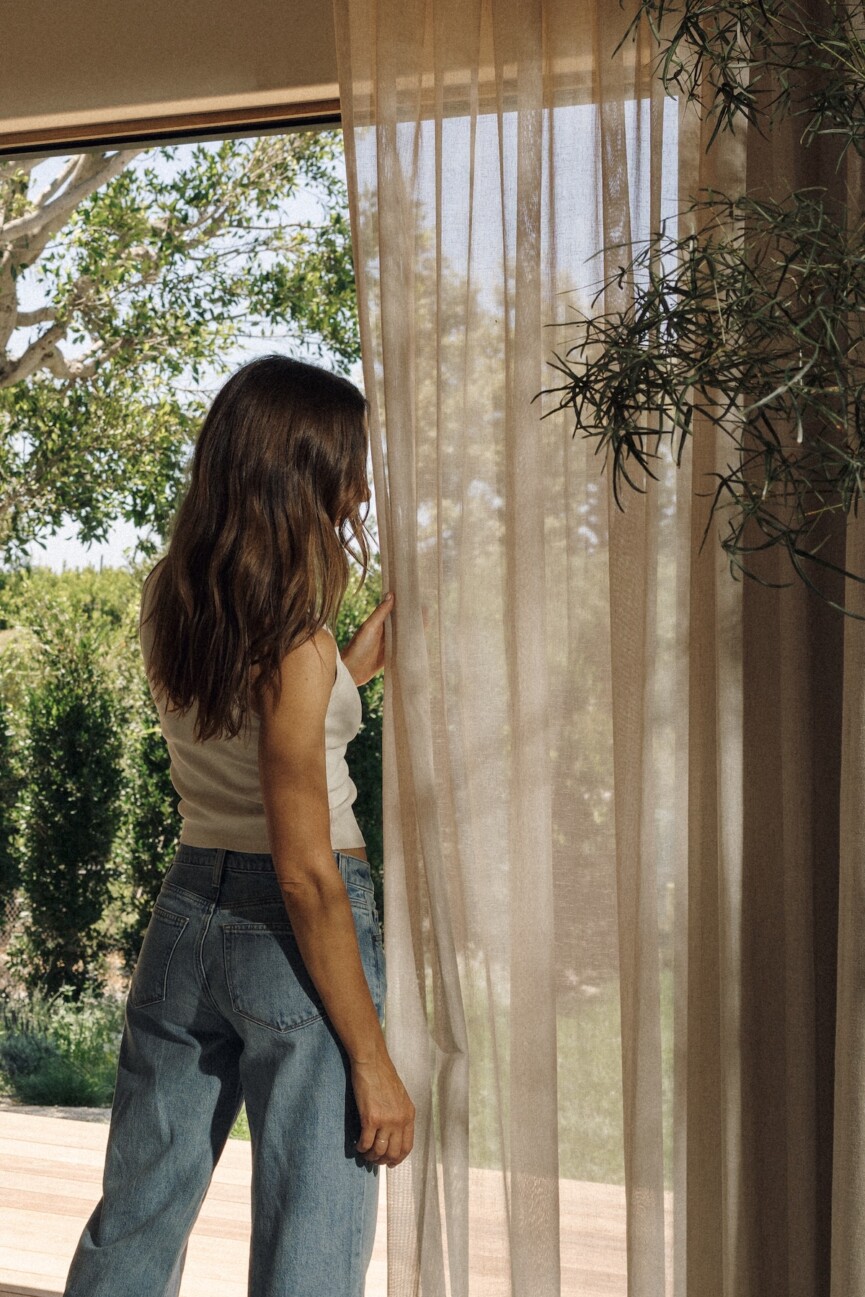
Drapery is having a major design moment, but I don’t see it as a passing trend. After years of rooms dominated by hard surfaces and minimal window coverings, fabric brings back softness, movement, and a sense of intimacy. It can make ceilings feel taller, give a wall more presence, and change the quality of light throughout the day.
Our goal was to use custom Graber drapery as an architecturally-driven material. We recessed the tracks into the ceilings so the curtains appear to fall directly from above, without visible rods or hardware interrupting the lines of the house. Each panel runs all the way to the floor, emphasizing the height of the rooms and creating one continuous plane of fabric.
For the opaque drapery, we chose LUNA in Flax with a tailored box pleat. The fabric has enough body to feel substantial, while its warm, natural tone sits quietly within our palette of plaster, pale oak, stone, and woven fibers. In the bedrooms, we added blackout lining so the same drapery that brings texture to the room during the day can create true darkness at night. For our sheers, we selected 5681 in Stone, a soft neutral that filters the light without turning it gray or overly cool.
That balance—clean architecture against fluid fabric, hard surfaces against soft ones—is what gives a neutral room depth. When you’re working with a restrained palette, texture is never an afterthought. It’s the thing that keeps simplicity from feeling flat.
DESIGN DECISION: Hide the hardware
If you’re renovating or building, discuss window treatments early enough to recess tracks or shade pockets into the ceiling. The nearly invisible hardware keeps the sightlines clean and lets the fabric and architecture do the work.
The Family Room
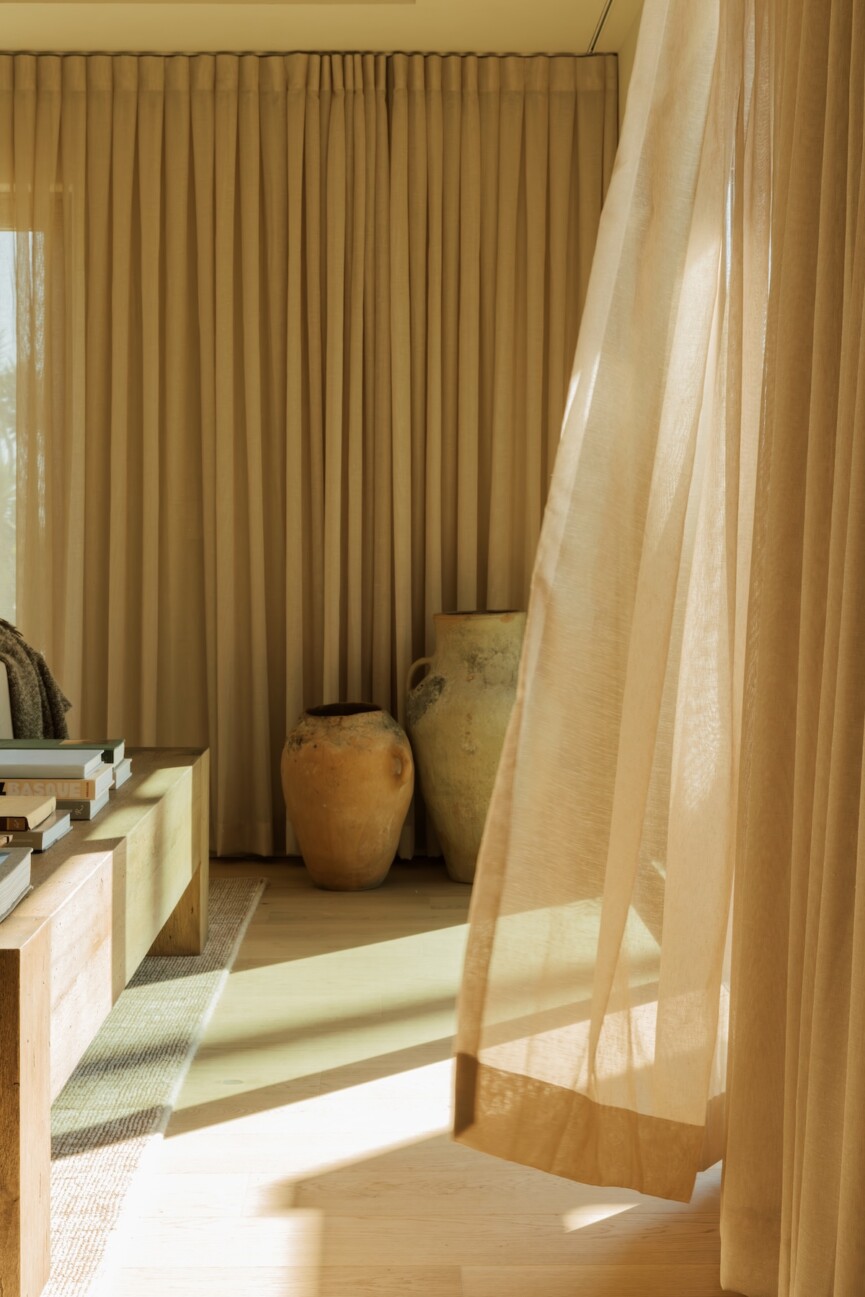
The family room is where the drapery surprised me most. Rather than stopping at the edges of the large glass doors, we extended the Stone sheers across the walls, making the room feel softer, cozier, and more enveloping. They filter strong daylight without closing off the view, and when the doors are open, they catch the ocean breeze in a way that feels airy and romantic. For movie nights, opaque LUNA in Flax panels close over them to darken the room.
DESIGN DECISION: Treat the wall, not only the window
Extending drapery beyond the frame makes an opening feel larger and gives the panels room to stack without covering the glass. In our family room, carrying the sheers farther across the wall also made the entire space feel softer and more finished.
The Primary Bedroom
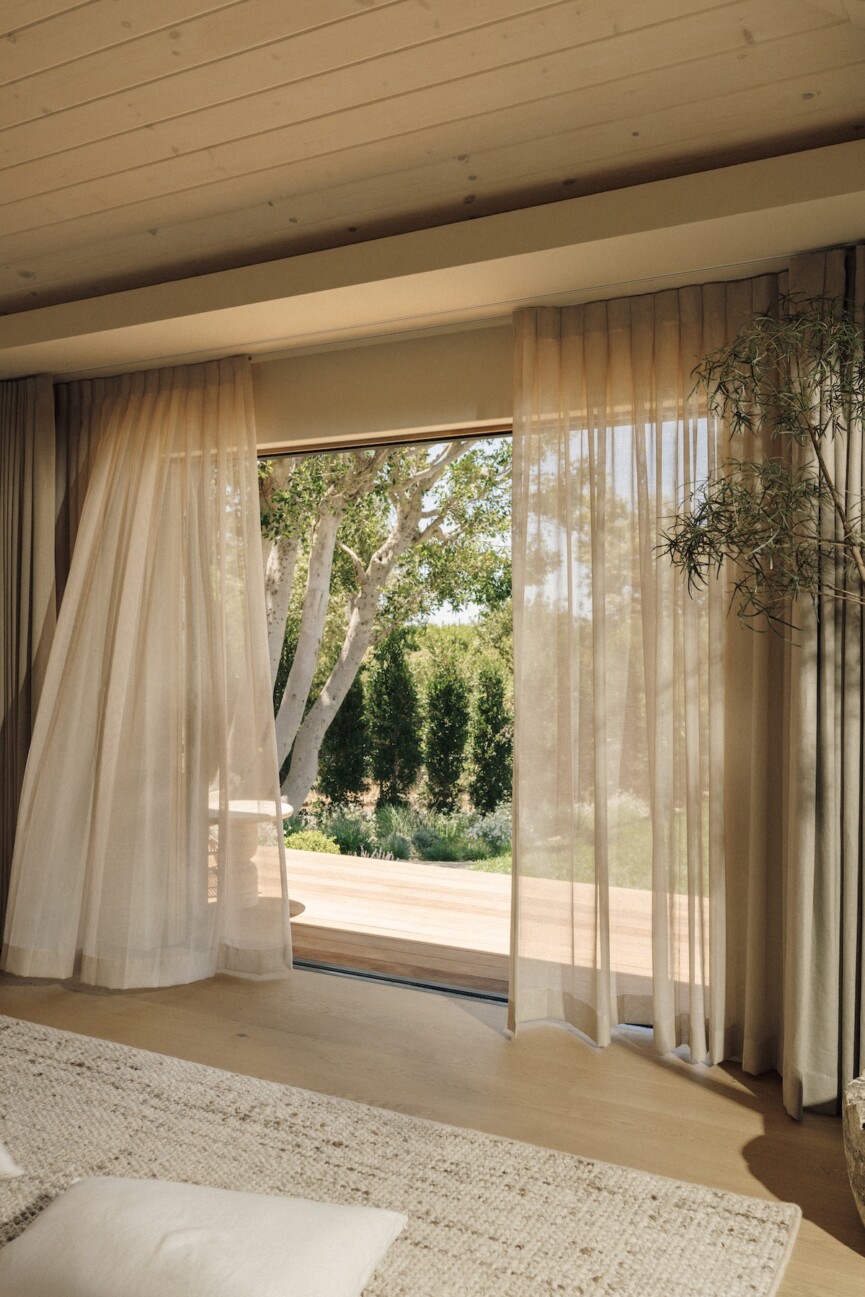
I wanted our bedroom to feel open to the landscape during the day, cozy in the evening, and completely dark at night. Across the pocket doors, we layered Stone sheers with motorized, room-darkening LUNA in Flax drapery; on the other windows, motorized Graber Roller Shades disappear into recessed ceiling pockets when raised. Now we can darken the entire room from bed at night, then open it to the morning light with the push of a button.
In the primary bathroom, motorized roller shades give us privacy around the bath without interrupting the clean lines or natural light. They disappear into recessed ceiling boxes when raised, then lower at the push of a button when we need coverage. A moisture-appropriate material made this streamlined solution much more practical than drapery in a room exposed to splashes and humidity.
DESIGN DECISION: Start with the room’s most important need
Before choosing a style, decide what the treatment must do: filter glare, protect privacy, darken a bedroom, resist moisture, or preserve a view. That answer will quickly narrow the options—and it may lead to different solutions within the same home.


Phoebe & Henry’s Rooms
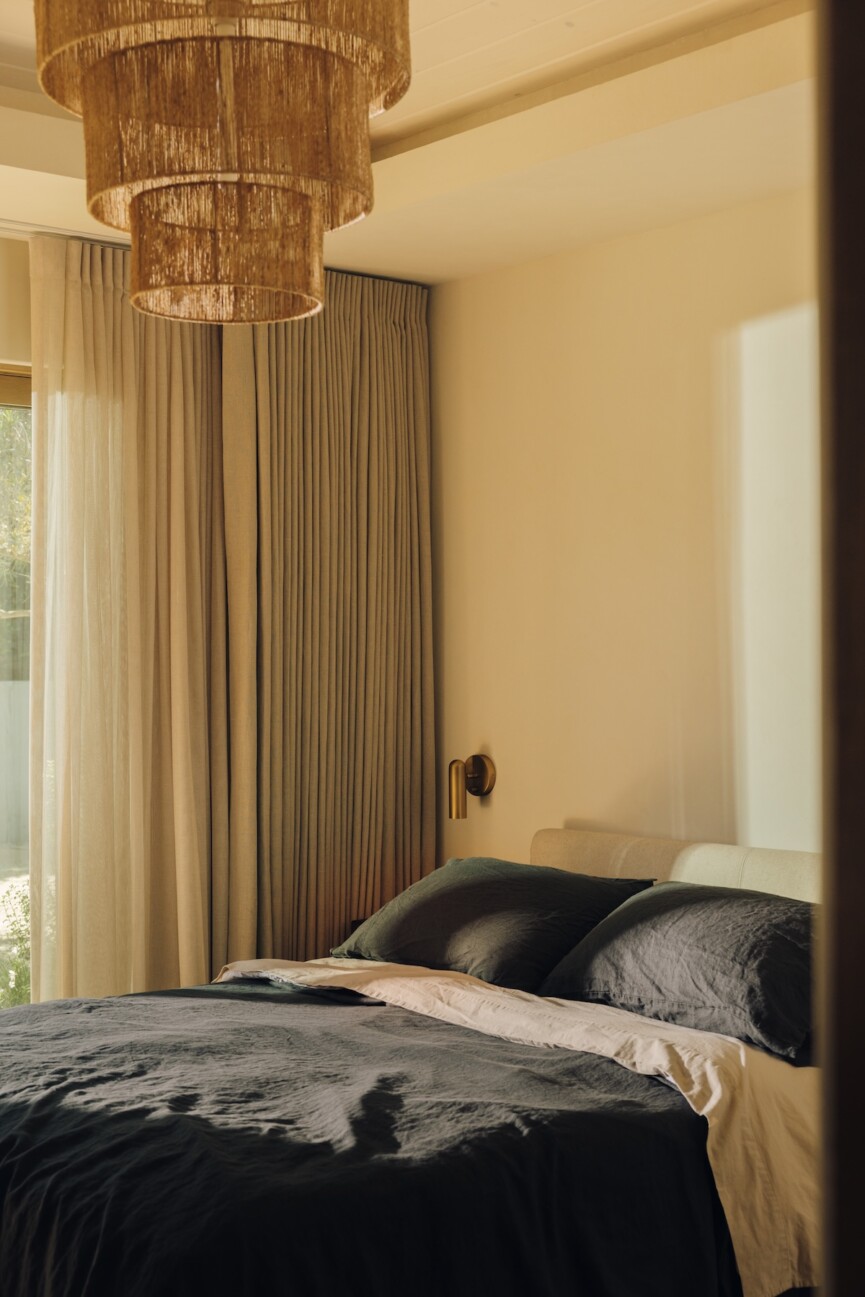
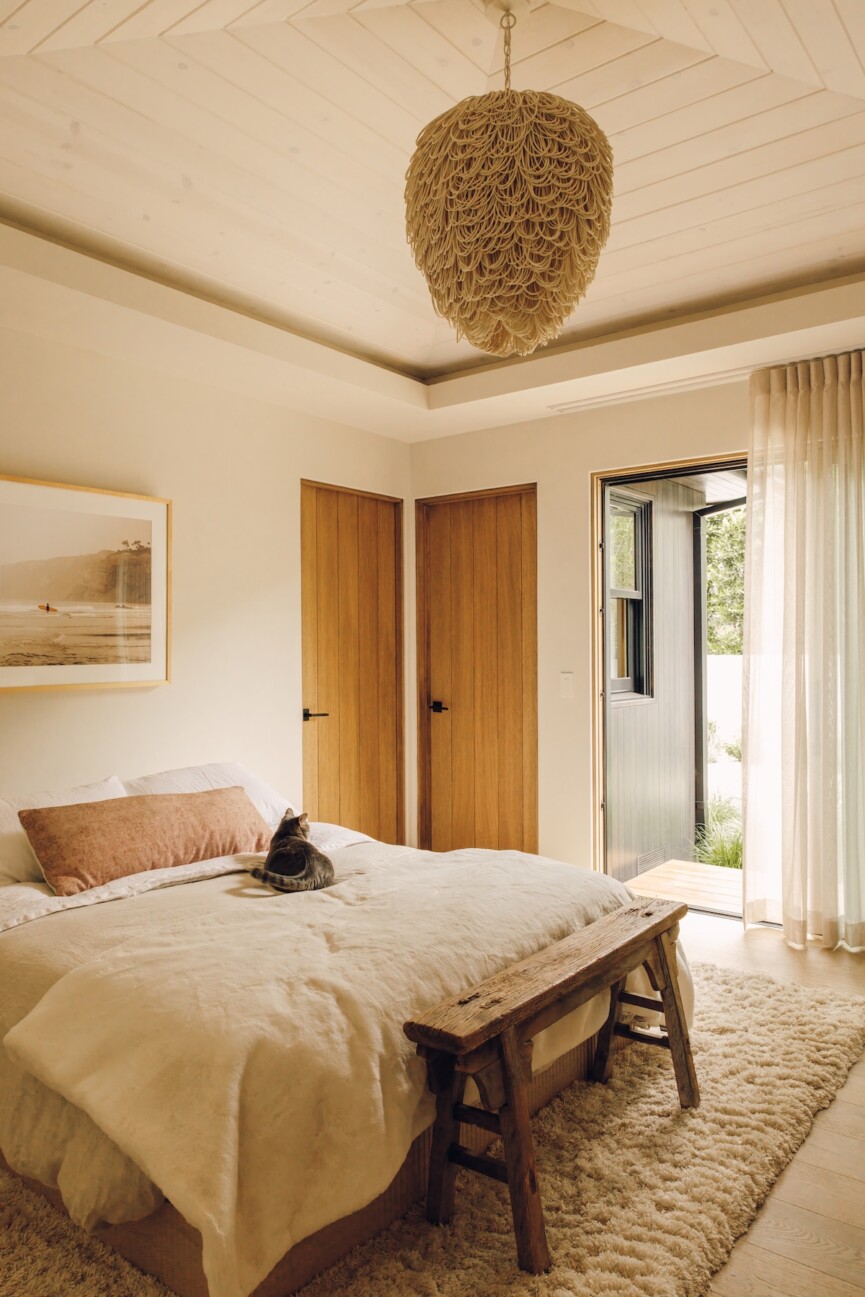
In Phoebe’s and Henry’s rooms, we layered sheers with blackout-lined LUNA in Flax drapery on flush ceiling tracks. The sheers keep both rooms light and relaxed during the day, while the opaque panels create true darkness at bedtime. The floor-to-ceiling length and tailored box pleats add softness without feeling overly formal—giving each room that considered, boutique-hotel quality.
What I Learned About Choosing Window Treatments
If you’re starting this process at home, begin by defining what each window needs to do—filter glare, protect privacy, darken a bedroom, or preserve a view—then choose the treatment accordingly. Drapery adds softness, movement, and height, while roller shades offer discreet light and privacy control; in several rooms, layering the two gave us the best of both. View fabric samples in the actual space throughout the day, consider where panels will stack when open, and plan recessed tracks or shade pockets before construction is finished. Our Graber dealer guided the selections, measured every condition, solved the challenging spaces, and handled installation—expertise I would absolutely rely on again.
If you’re beginning your own window-treatment project, find a local Graber expert to help translate your vision into the right custom solution for each room.
The Resources
- Drapery: Graber Artisan Drapery
- Opaque fabric: LUNA in Flax; blackout lining in bedrooms
- Sheer fabric: 5681 in Stone
- Drapery style: Box pleat on flush, ceiling-recessed tracks
- Roller shade fabrics: Broadcast in Cashmere; TAN in Shadow solar roller
- Primary bedroom: Motorized drapery and motorized roller shades
- Primary bathroom: Motorized roller shades in recessed ceiling boxes
- Family/media room: Manual layered drapery on a flush track
- Phoebe’s and Henry’s rooms: Manual sheer and blackout-lined drapery on flush tracks
- Project consultation: Find a Graber expert

Continue the tour
How We Made a Small Laundry Room Work Twice as Hard
Custom storage, hardworking surfaces, and a place for everything (including our cat).
The Retreat Within the Beach House: Inside Our Primary Suite
Natural linen, handmade tile, and a connection to the landscape create the most peaceful room at Casa Zuma.
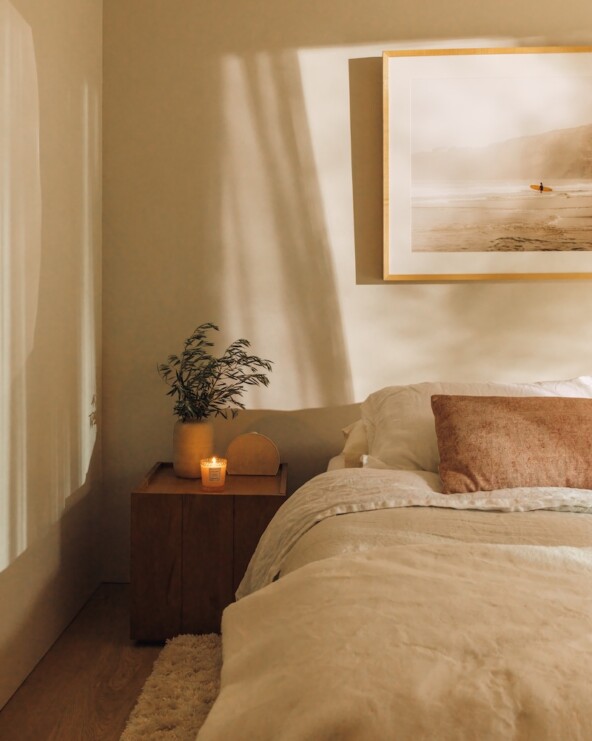
A Tale of Two Bedrooms: Inside Our Kids’ Rooms at Casa Zuma
One light and airy, one warm and moody—two spaces shaped around the rhythms of our family.